A first-hand account of running the world's longest race
riguardo l'autore:
Nirbhasa is from Ireland. He is an enthusiastic multi-day runner, having completed four times the Sri Chinmoy Self-Transcendence 3100 Mile Race - the longest race in the world.
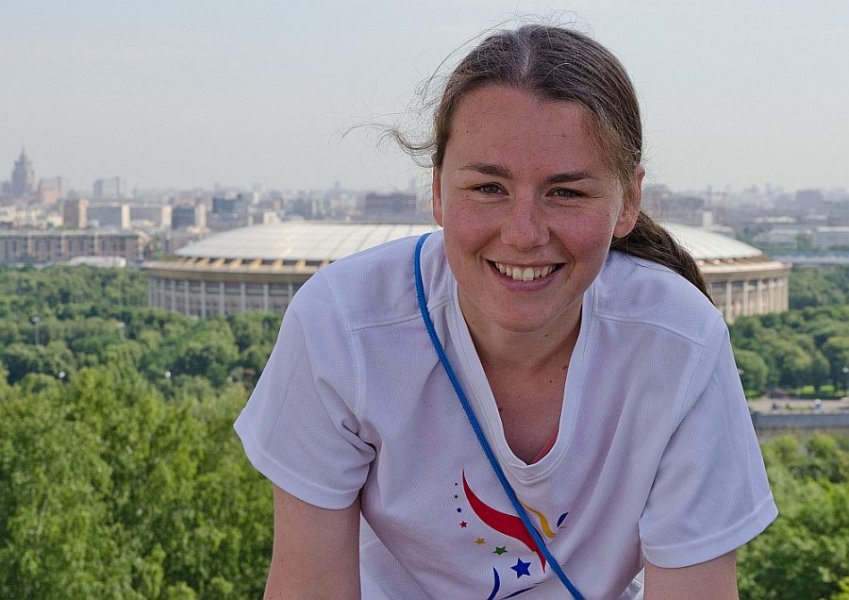
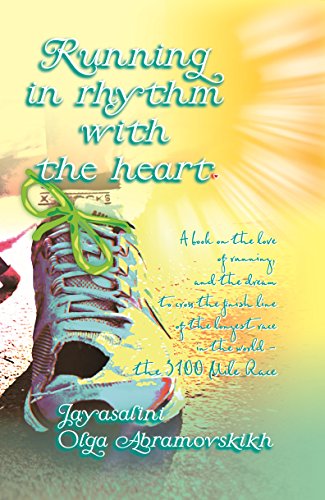
Running in rhythm with the heart, Jayasalini Olga Abramovskikh's account of her epic finish of the Sri Chinmoy Self-Transcendence 3100 Mile Race, is now available in a new English translation.
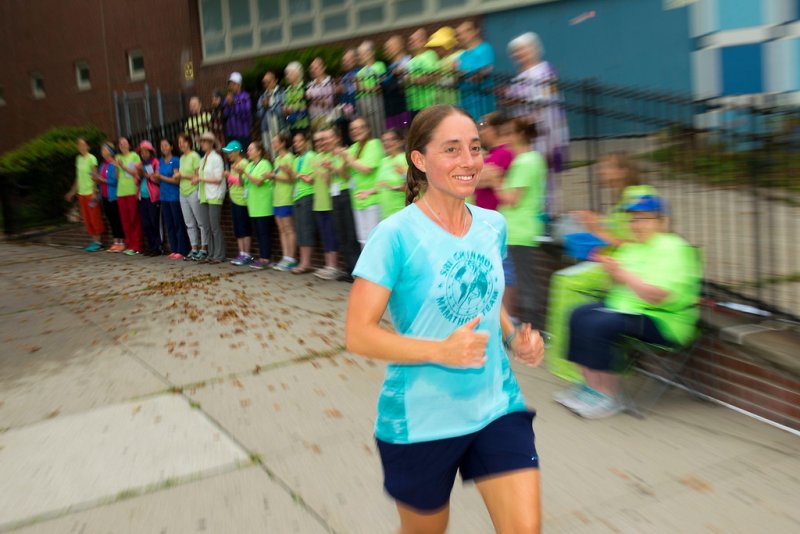
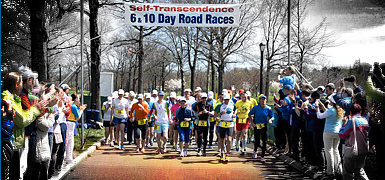
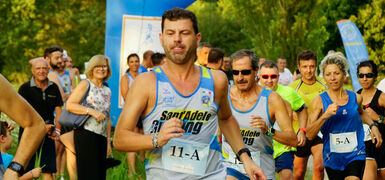
In 2014, Jayasalini became the first Russian woman to complete the race when she crossed the line in 51 days, 12 hours and 31 minutes - less than 6 hours before the cut-off. Before she attempted this race, Jayasalini was also a regular participant in the Sri Chinmoy 6 and 10 day races held every April in Flushing Meadows, Queens, invariably finishing in the top three runners.
In the book - subtitled 'A book on the love of running, and the dream to cross the finish line of the longest race in the world' - Jayasalini talks about what inspired her to contemplate such a long race, her training and preparation, and her experiences during and after the race. Originally published in Russian, the English translation came out this month.
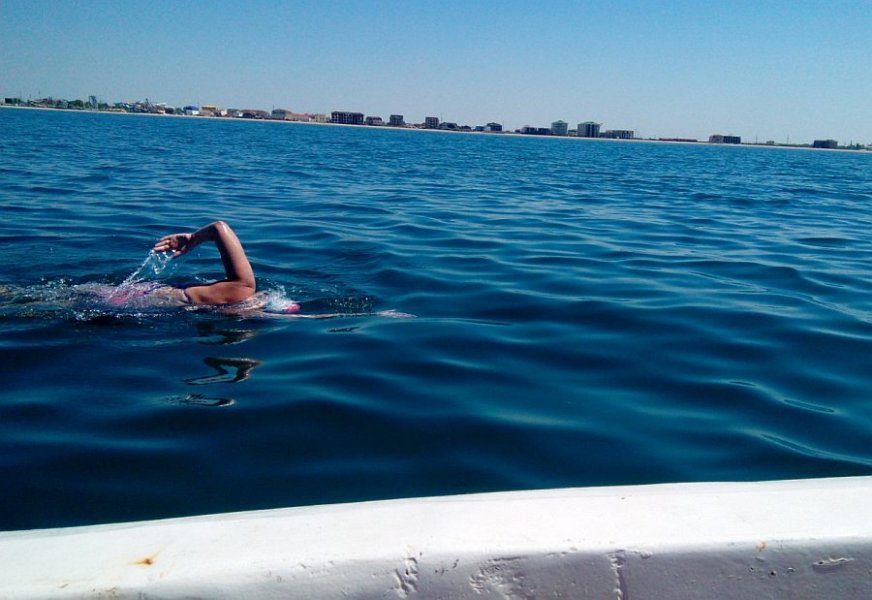
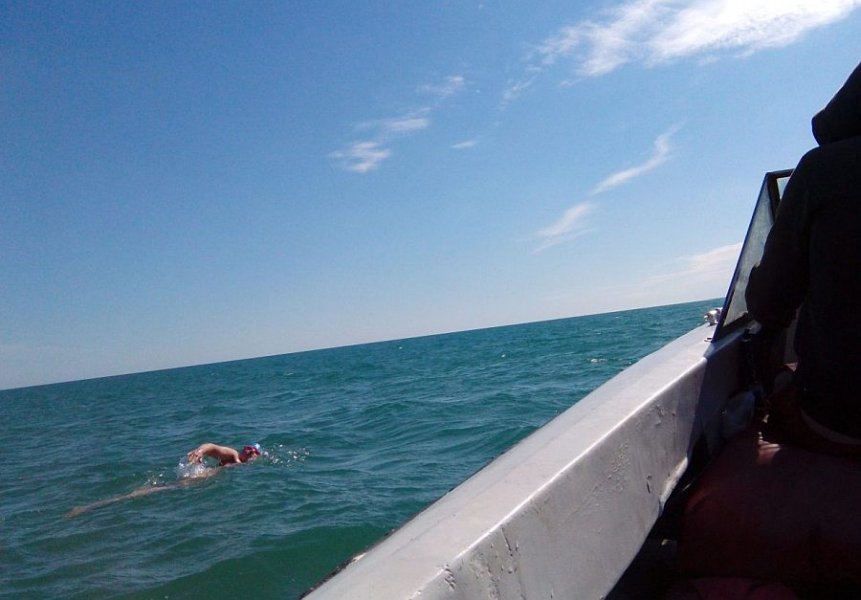
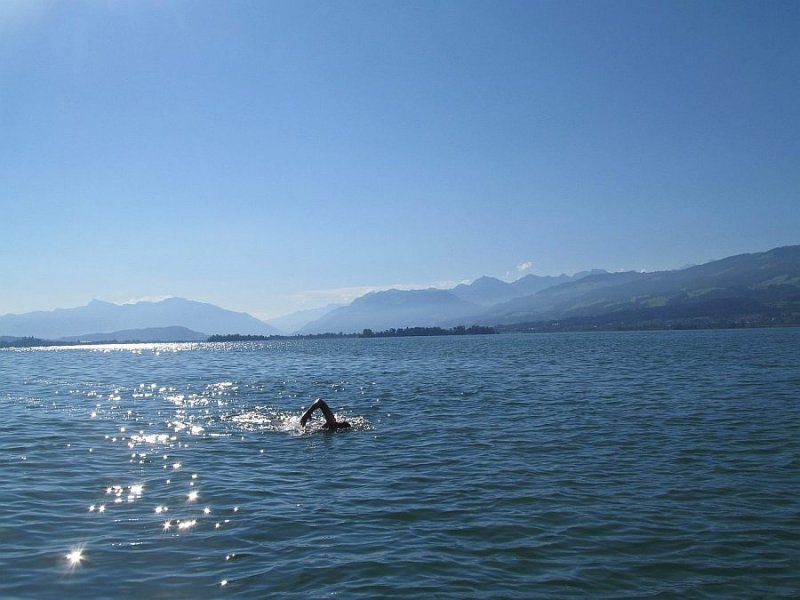
Abhejali Conquers the North Channel - 6 down, 1 to go in her Oceans Seven Challenge
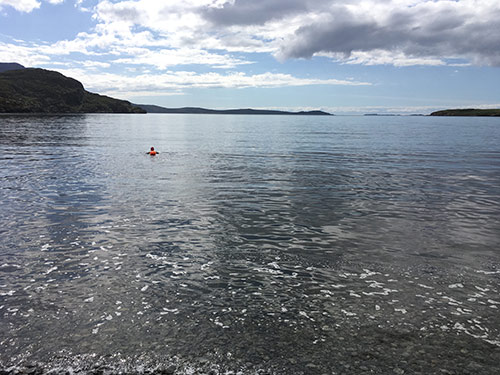
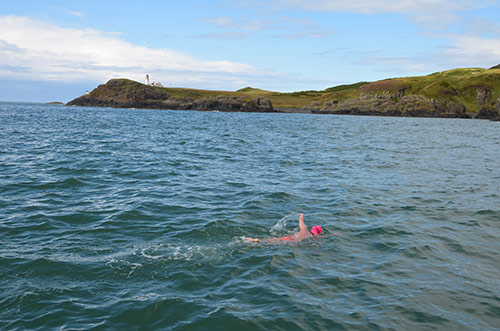
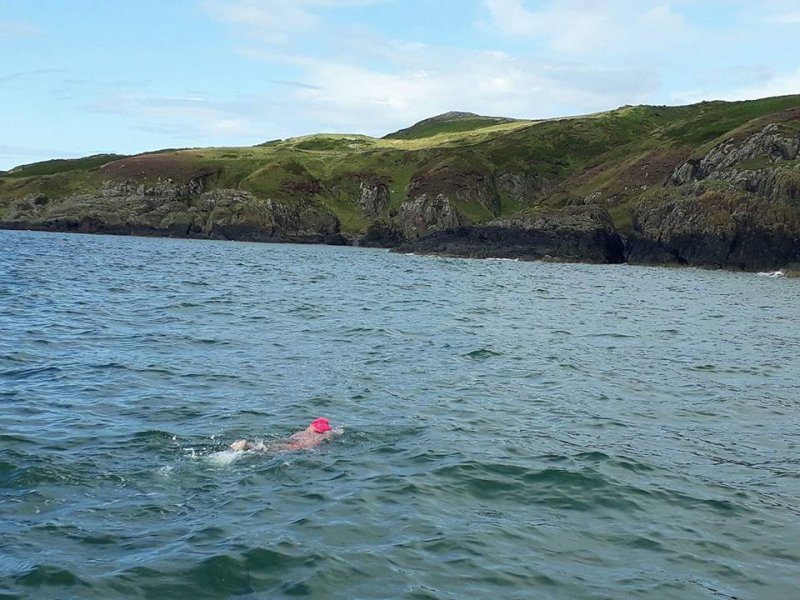
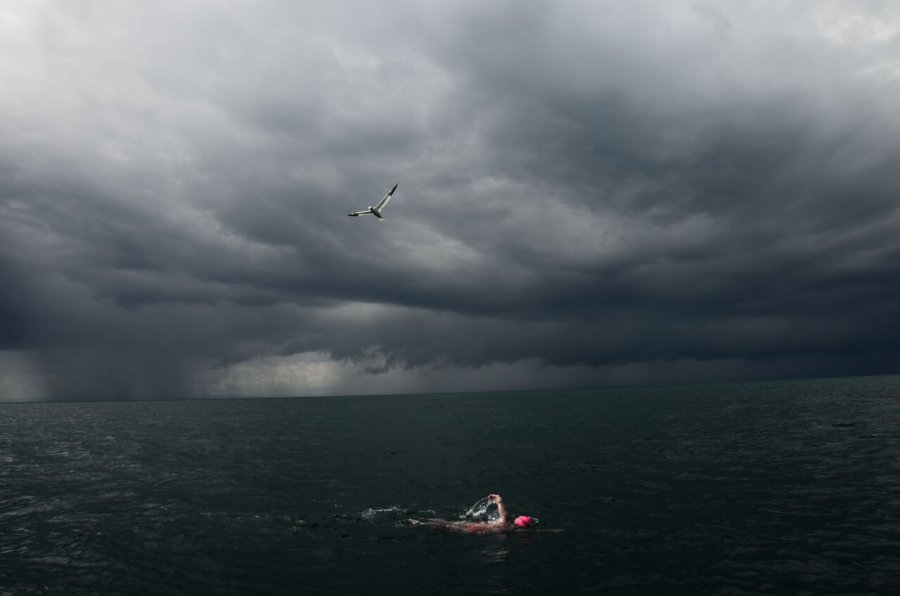
Almost there - Abhejali reaching the Scottish Coast of the North Channel - photo Mark Hamilton
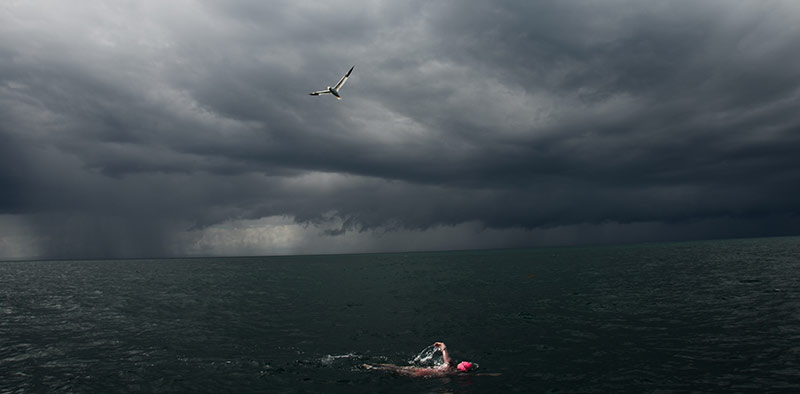
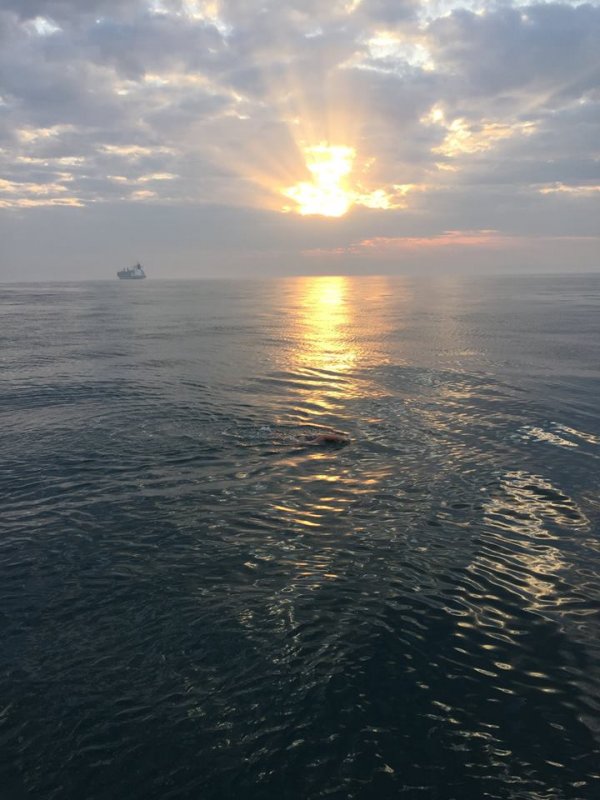
North Channel magic - photo Jana Bernadova
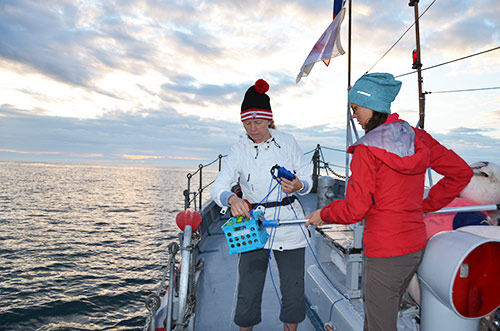
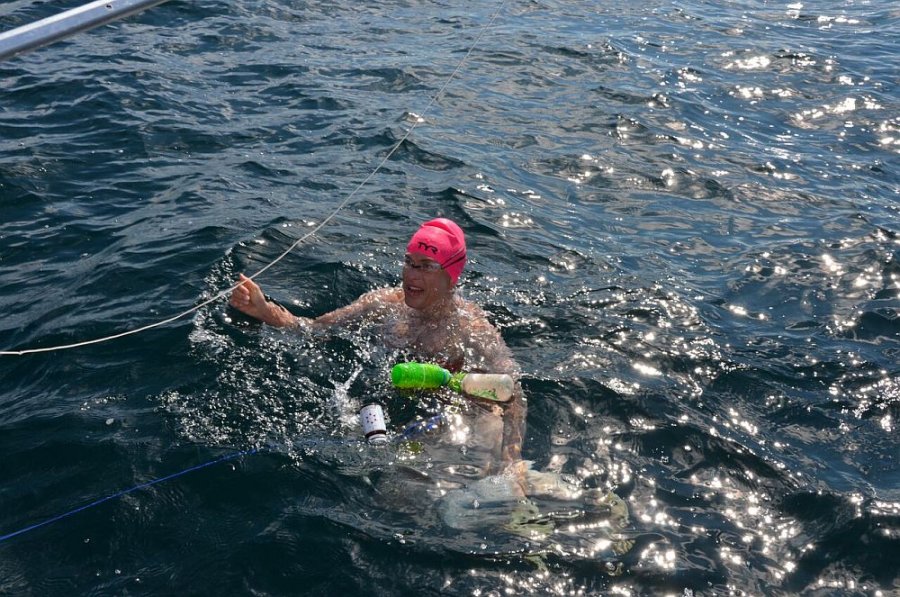
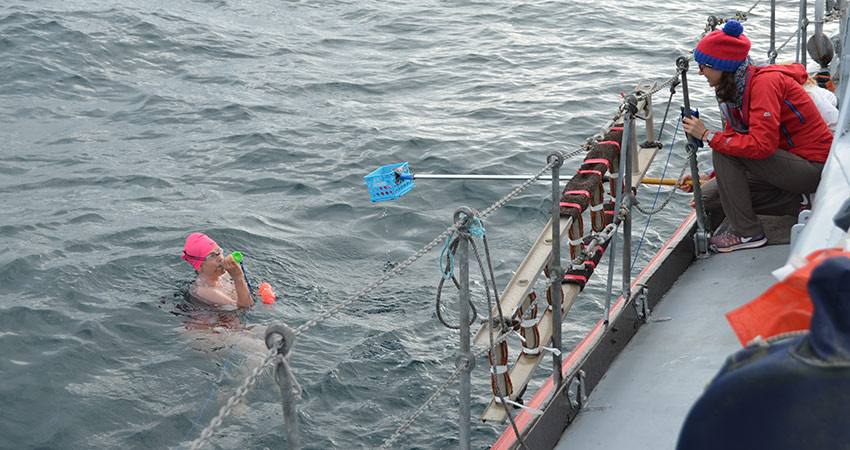
Feeding in the 14°C North Channel - photo Jana Bernadova
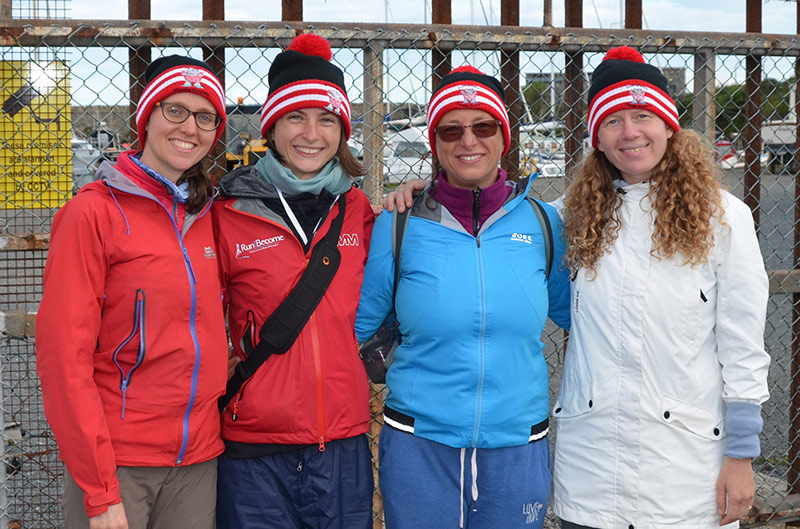
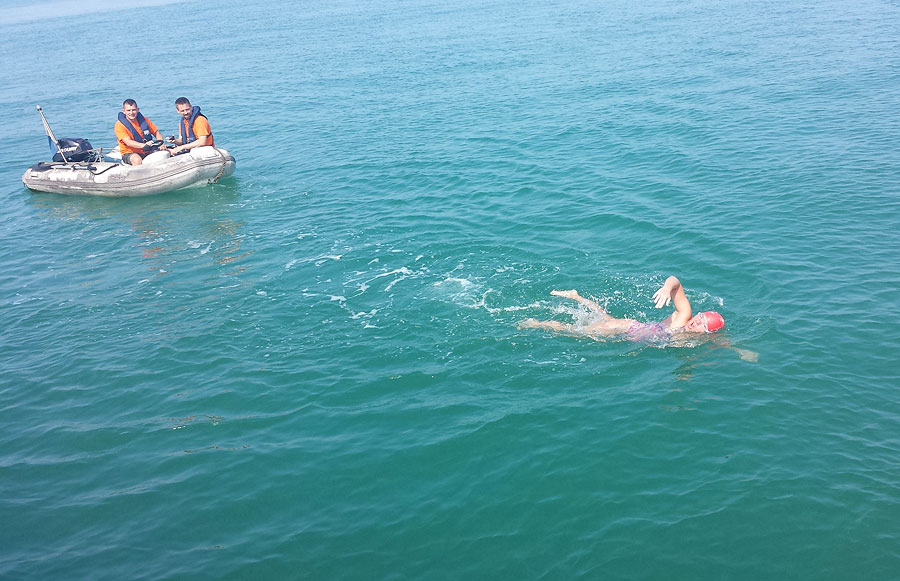
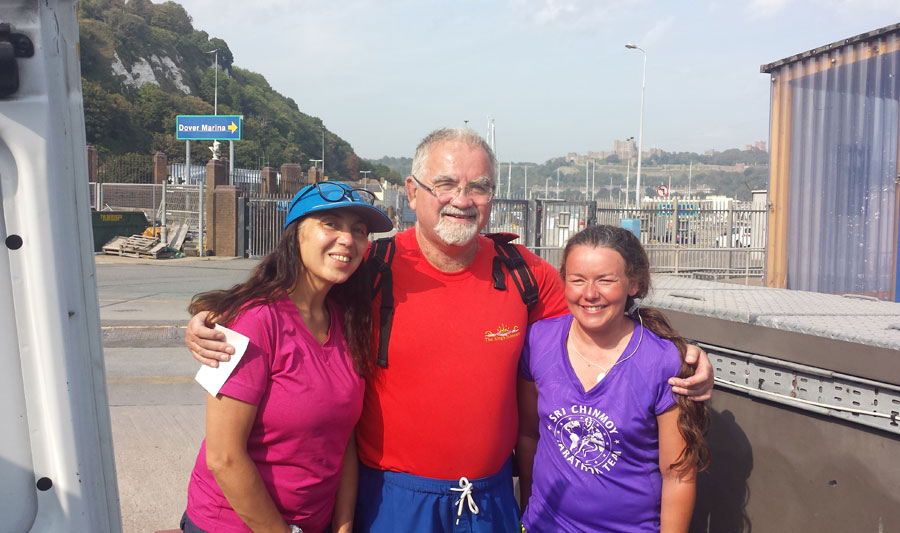
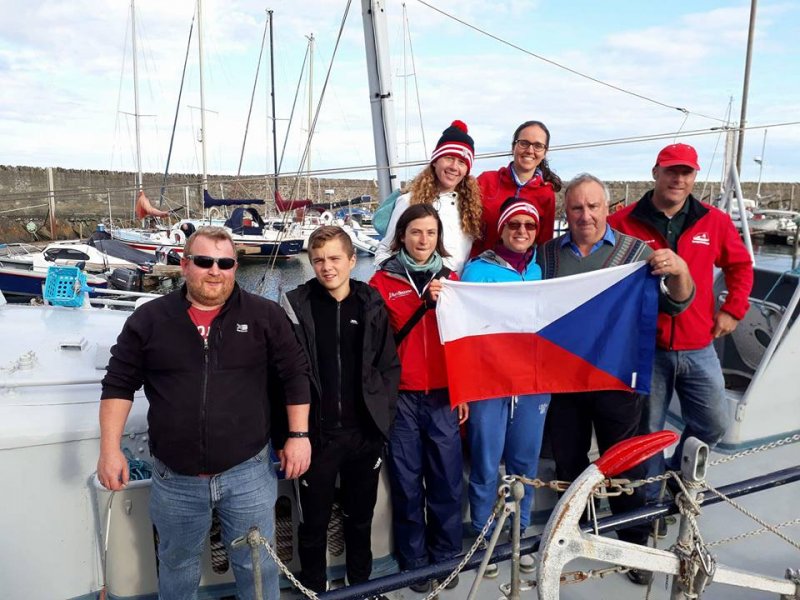
Abhejali with helpers, pilot and observer - photo Mark Hamilton
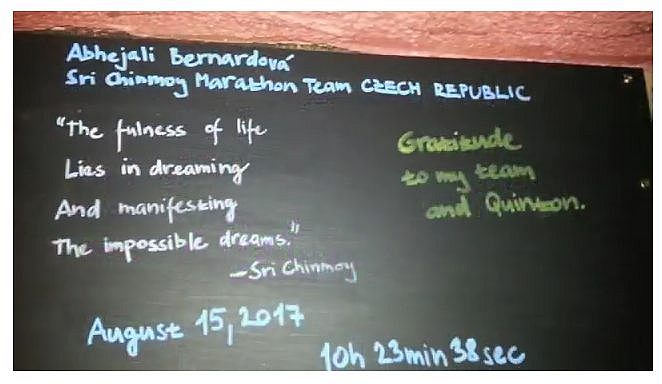
Dancing with the Lion Mane Jellyfish: Abhejali swims from Northern Ireland to Scotland (35 km) in 10 hours 23:48
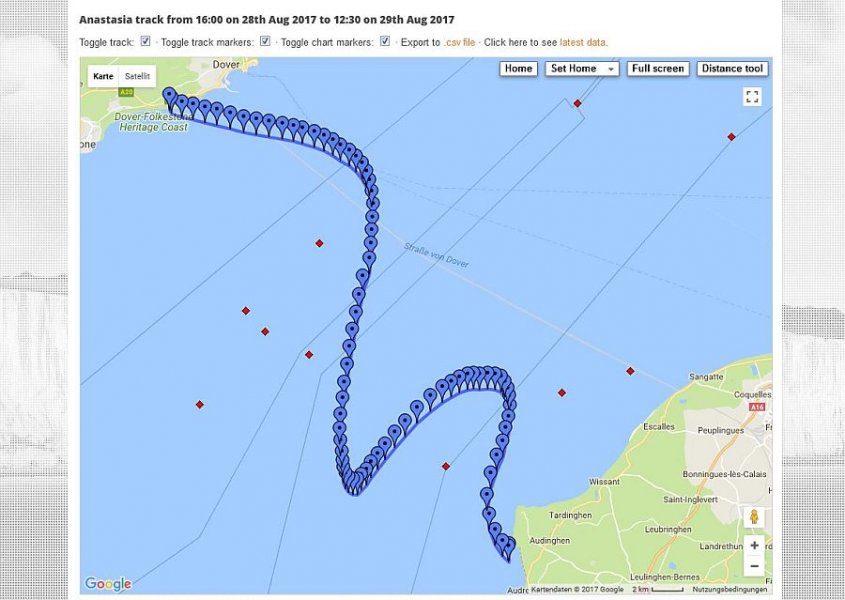
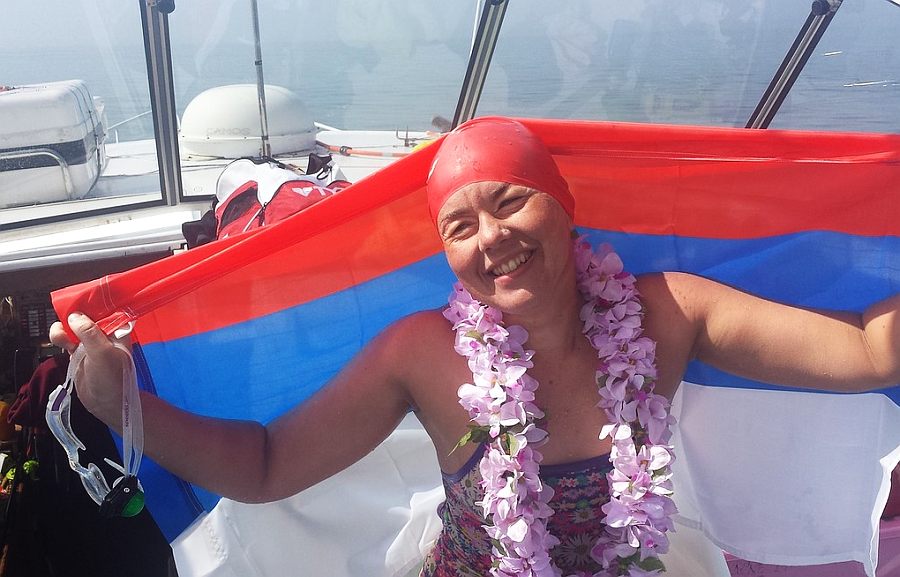
On Aug 15, 2017, Abhejali Bernardova, a member of the Sri Chinmoy Marathon Team from Zlin, Czech Republic, completed her 6th Oceans Seven challenge by conquering the North Channel from Donaghadee in Northern Ireland to Portpatrick in Scotland (35km - about the same distance as the English channel) in an excellent time of 10 hours 23:48, assisted by her experienced crew (Catalina, EC, Tsugaru): her sister Jana from London, Scottish team member Dhavala Stott and Jayalata from N.Y. According to the ILDSA (Irish Long Distance Swimming Association) it was the fastest crossing of the six solo swims so far of 2017.
The North Channel is widely regarded as one of the hardest sea swims in the world, due to low water temperatures (10-14°C, warmest in August), ubiquitous Lion mane jellyfish that surface with the sun, strong currents and very unpredictable and changeable weather. Abhejali is the first Czech swimmer – male or female - to swim the North Channel, the 17th woman overall and only the 49th person in the world to successfully complete the swim.
A 50:50 chance of a swim
The night before her actual swim, pilot Quinton Nelson said there was a 50:50 chance for a swim the next morning. Some forecasts were good, some predicted strong winds. It was agreed to meet at the boat at 5 a.m. in the morning to assess the actual weather conditions and make a final decision. On Tuesday morning, conditions on the Irish side were very calm, so it was a go – still with conflicting forecasts for the rest of the day and the distance. The team asked all her supporters to pray for conditions to stay good and swimmable - and maybe it helped. The wind only picked up a little to force 3 or 4 for a few hours later on, even though some forecasts had predicted force 6 or even 7. The sun came out quite soon, and rain came only an hour or so before the landing (it rained heavily on the way back). A few days after the spring tide, the currents were still quite strong and Abhejali was asked to swim hard, to feed only every hour to avoid wasting time and being swept off course, and even hours from the finish the pilot told her to keep up the pace and to give it her all. Still, currents pushed her back south past the nearest landing point, the lighthouse, adding another ½ mile. Water temps hovered around 14°C – but she had trained for that with ice baths at home and arriving early to the Irish Sea to acclimate, plus swimming hard all the way also helped. Special blessings were a dolphin and seal near the start and a beautiful rainbow over the landing point. Jellies were present – but the 12 stings on her arms were nothing compared to the painful stings she got in the Molokai Channel, Abhejali said.
The first successful swim across the cold North Channel actually took place exactly 70 years ago by Brit Tom Blower. The first woman in 1988 was Alison Streeter, the Queen of the English Channel. Abhejali said after the crossing: "I knew it was going to be challenging, because of the cold water, so I put on 12 pounds in preparation. The weather was not perfect, but it was the only slightly possible day in my swim window. In the end I was the only swimmer to attempt a North Channel swim that day. I encountered a lot of Lion Mane jellyfish and got stung by about a dozen of them, luckily not in my face. The weather worsened and the water was really cold, so I tried to swim as quickly as possible. Eventually we were caught up in heavy rain."
The Oceans Seven Challenge
Having swum 6 of the toughest Channels in the world: the English Channel (2011), Strait of Gibraltar (Europe to Africa, 2013), Catalina Channel (USA, 2015), Tsugaru Strait (Japan, 2016) and the Kai'wi Channel (Molokai to Oahu, Hawaii, 2017), only the Cook Strait in New Zealand is missing for Abhejali to complete her Oceans Seven, the marathon swimming equivalent of the Seven Summits mountaineering challenge, which only 7 people (3 women) in the world have achieved so far.
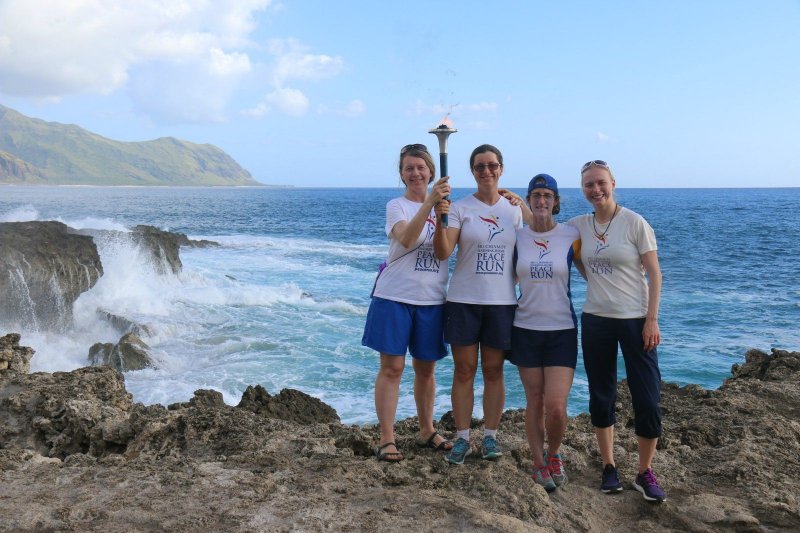
Abhejali has been practicing meditation and a vegetarian lifestyle since 1995, and she clearly feels that wholesome plant-based nutrition and the inner peace, poise and focus gained by her regular meditation practice are helping in her athletic endurance challenges in many ways. She also is a multiple Czech running champion for 100k and 24 hours and completed a six-day race in New York with 616 km. In March 2017 she organised the first 6 hour indoor swim race in the Czech Republic, which was quickly fully booked out. In her free time she also runs in and organizes the Sri Chinmoy Oneness-Home Peace Run, the longest relay run for Peace and Friendship in the world.
Through her channel swims Abhejali tries to connect places and people and inspire others to overcome their own perceived limitations.
For more information or to interview Abhejali, please contact: [email protected]
And here a very inspiring video about Abhejali's North Channel swim:
Sri Chinmoy completed 22 marathons, 5 ultras and countless sprinting and middle distance races over a career that lasted many decades. He always felt that running and meditation should go together, and that competitions and races could help one inwardly progress as long as the runner had the right attitude. Here are a selection of his writings on running and competition:
The value of competition
We cannot properly evaluate our own capacity unless we have some standard of comparison. Therefore, we compete not for the sake of defeating others but in order to bring forward our own capacity. Our best capacity comes forward only when there are other people around us. They inspire us to bring forward our utmost capacity, and we inspire them to bring forward their utmost capacity. This is why we have competitive sports.
Before a race
Before the race starts, meditate most soulfully for five minutes. Try to make yourself feel that you are not the runner, but that somebody else is running in and through you. You are only the witness, the spectator. Since somebody else is running, you are at perfect liberty to watch and enjoy. While you are running, sometimes it is very difficult to enjoy the race. Either the competitive spirit or frustration is killing you, or your body is not abiding by your mental will and you feel that you are literally dying. So many problems arise.
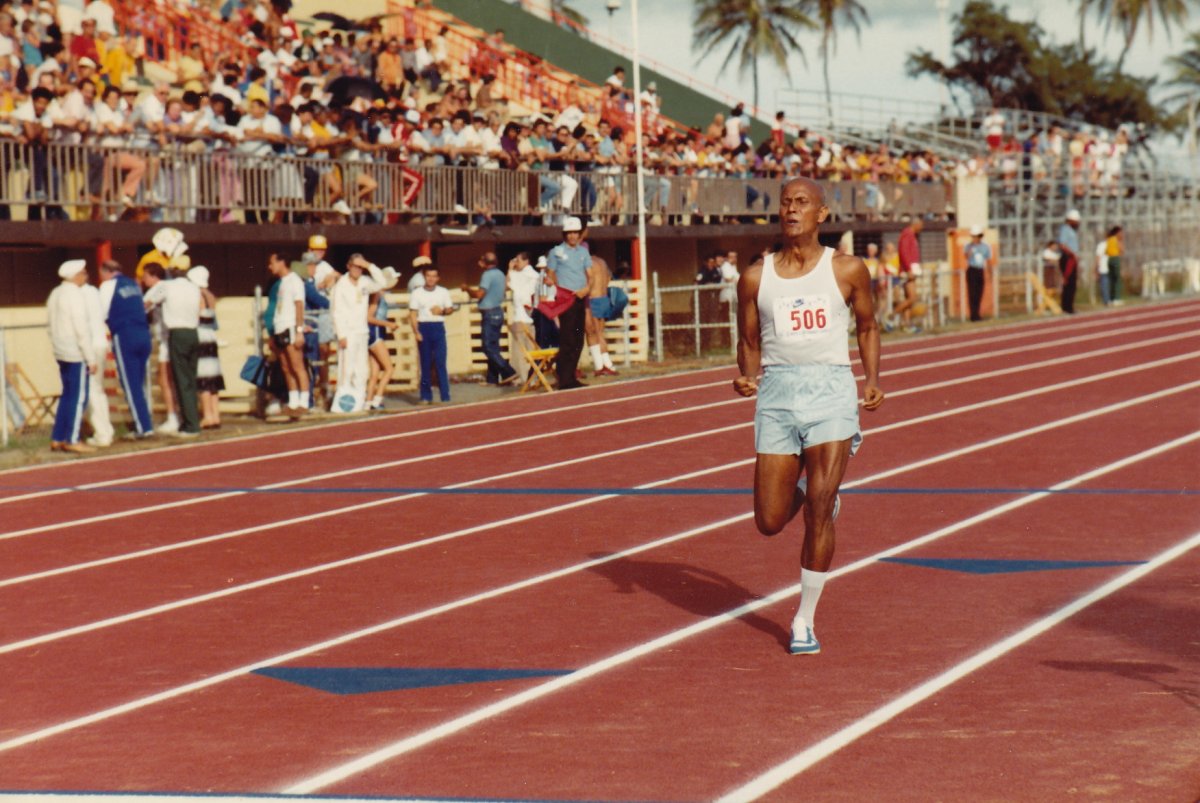
Sri Chinmoy competes in the 100m in the World Masters Games, Puerto Rico, 1983
But before you start, if you can convince yourself that you are a divine observer and that somebody else is running in you, through you and for you, then fear, doubt, frustration, anxiety and other negative forces will not be able to assail your mind. Once these thoughts occupy the mind, they try to enter into the vital and then into the physical. Once they enter into the physical, they create tension, and this makes you lose all your power of concentration. But if you feel that you are not the runner, if you feel that you are observing the race from the beginning to the end, then there will be no tension, and these forces will not attack you. This is the only way to overcome these forces and maintain the highest type of concentration from the beginning to the end.
This is what I do. Right from the beginning I try to become an instrument and feel that somebody else, my Beloved Supreme, is running in and through me. At the beginning of the race, I offer my gratitude-heart to the Supreme, and at the end, after I finish the race, I also offer my gratitude. If you can offer your soulful gratitude to your Inner Pilot before the race, during the race and after the race, then there can be no frustration, no decline of aspiration. Your aspiration and your power of concentration will remain the same throughout the race.
Coping with losing
To cope with the disappointment of losing, you have to ask yourself whether the mind is disappointed or the heart is disappointed. You will come to realise that it is your mind that is disappointed and not your heart. The mind creates division; the mind is division itself, and division is another name for pain, devastating pain. The heart, on the other hand, creates oneness; in fact, the heart is oneness itself, and oneness is another name for joy, spontaneous joy. When you live in your heart, even if your worst rival wins the race, you will not feel miserable. To your wide surprise, you will find that his joy quite unconsciously and unexpectedly will enter into you and widen your heart. Then you will feel almost the same joy that the winner feels.
Tejvan organises short-distance running and cycling races for the Sri Chinmoy Marathon Team in his home city of Oxford. He is also a very good cyclist, having won the National hill climb championships in 2013 and finished 3rd in the National 100 Mile Time Trials in 2014.
Kaneenika Janakova sets new women's record for 3100 miles
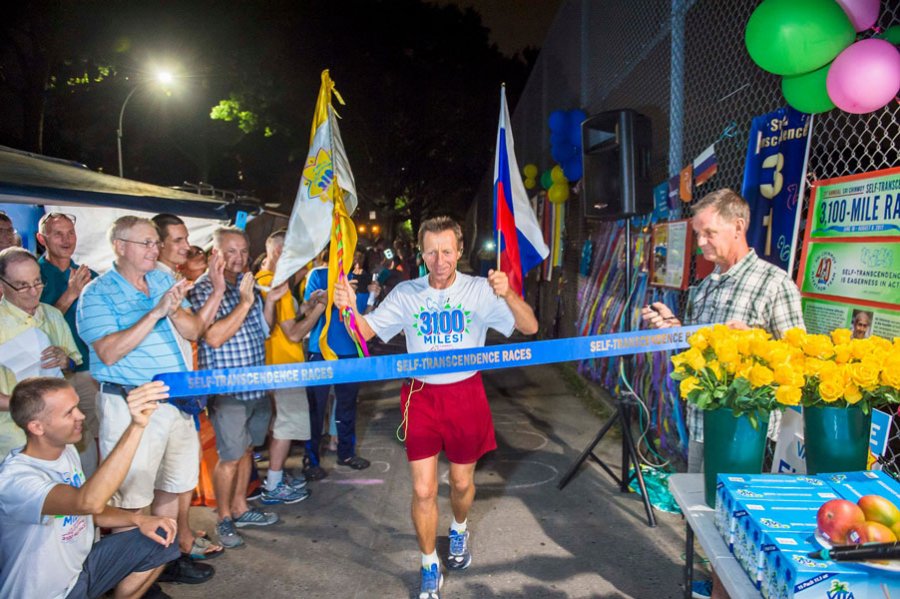
Vasu Duzhiy finishes 3100 Mile Race in 1st Place
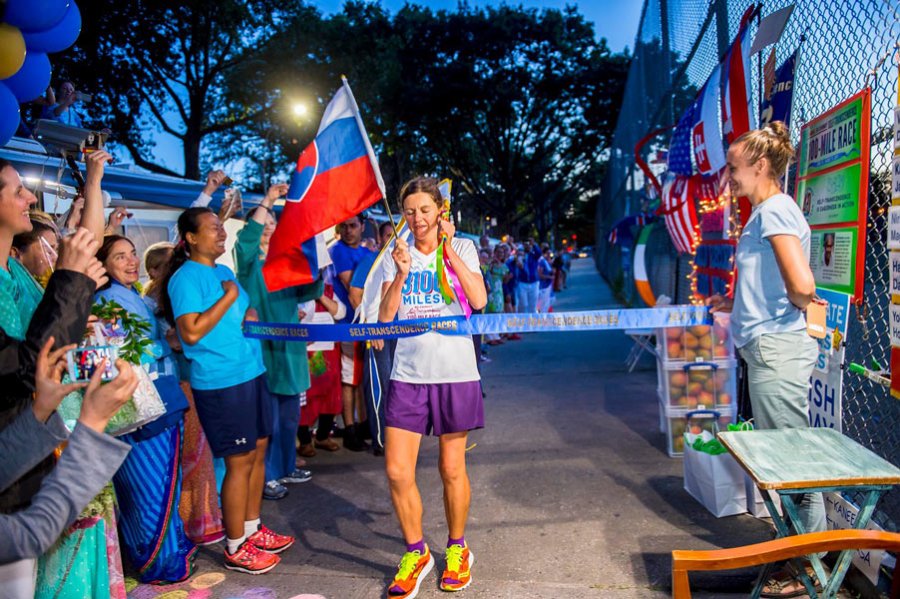
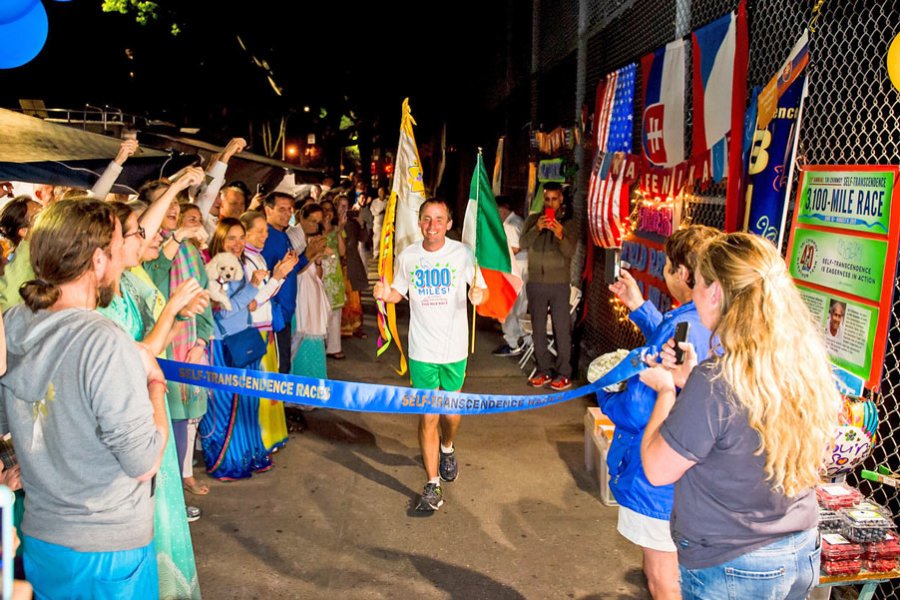
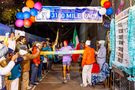
Crowds greet Vasu on his finish
Kaneenika with 13 time finisher Suprabha Beckjord
Kaneenika with Yolander Holder still racing
Nirbhasa finishes 3100 Mile race in 3rd place
The 3100 Mile race lasts 52 days
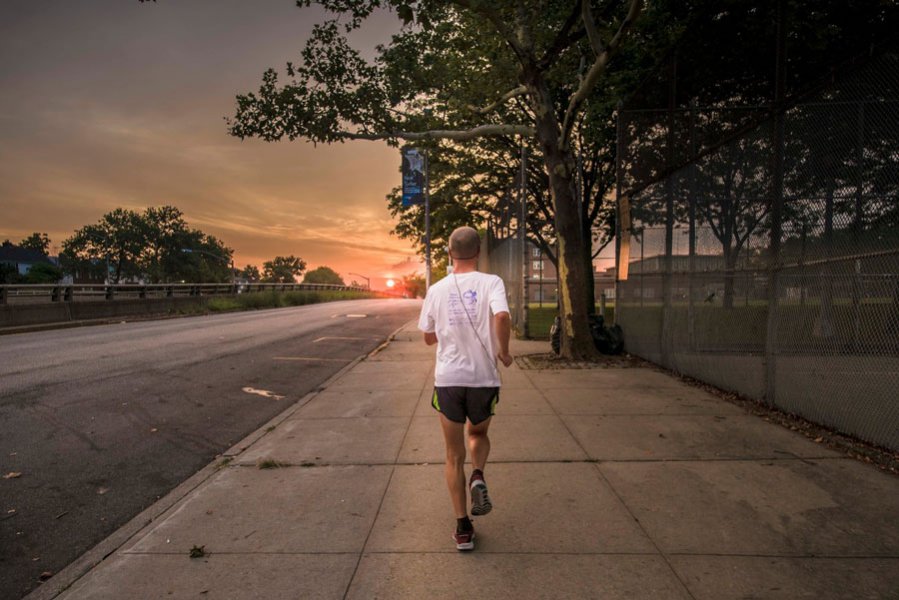
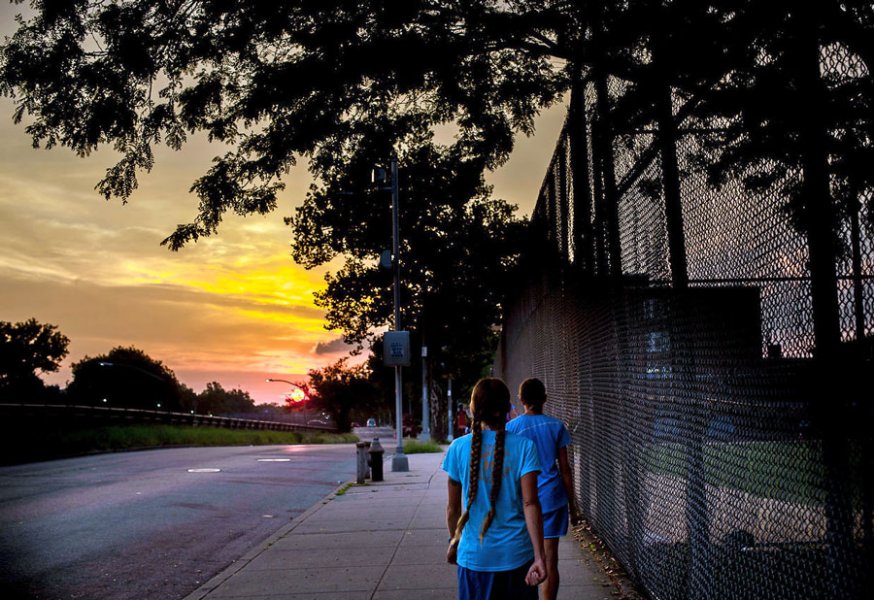
Racing into the evening
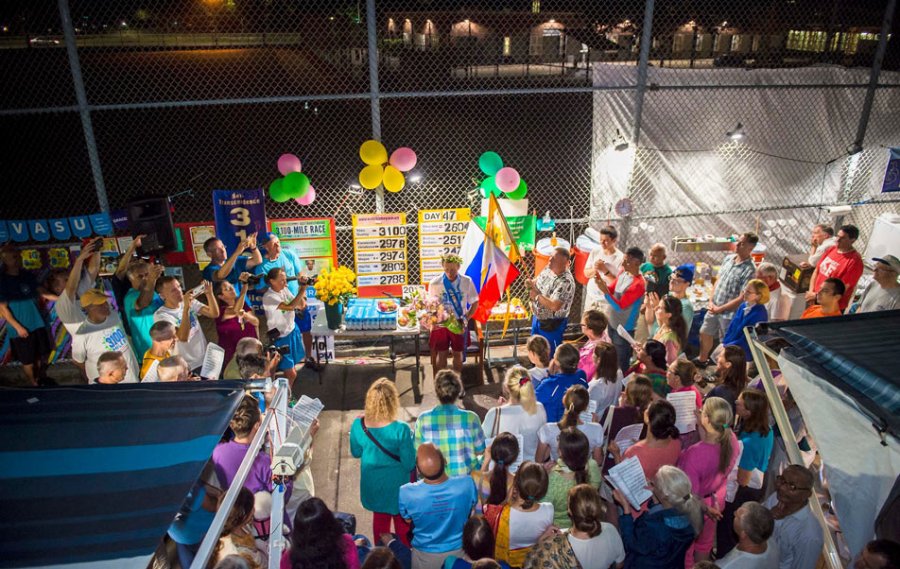
Racing late into the night
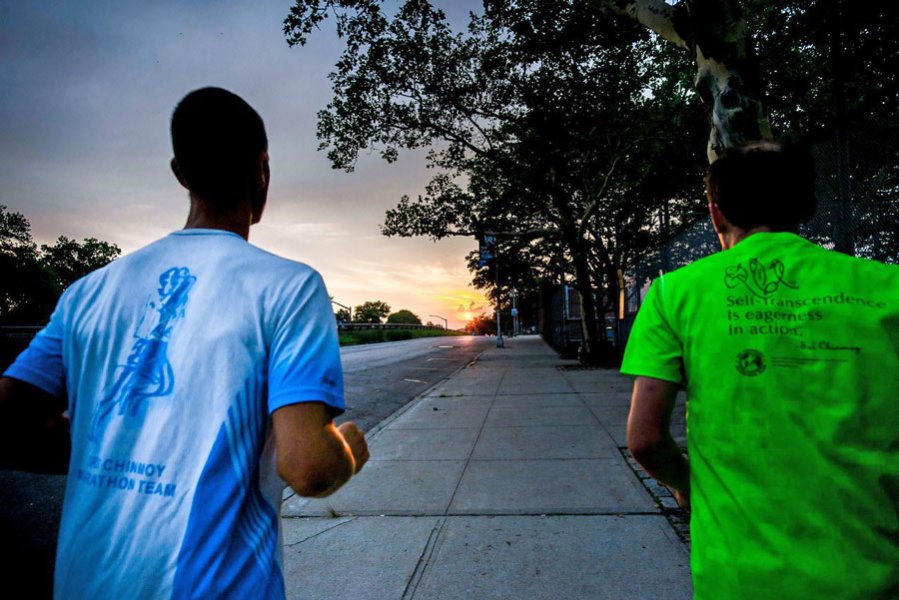
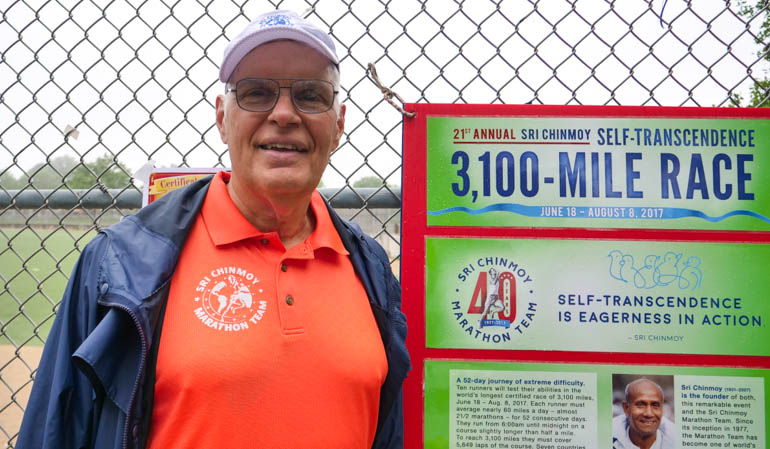
"Self-Transcendence is eagerness in action" - Sri Chinmoy
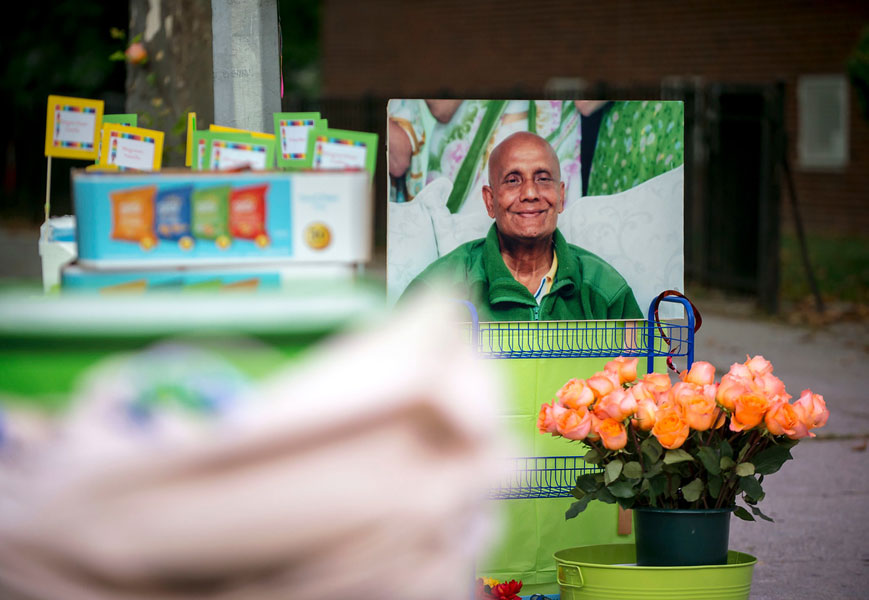
Sri Chinmoy - the race founder
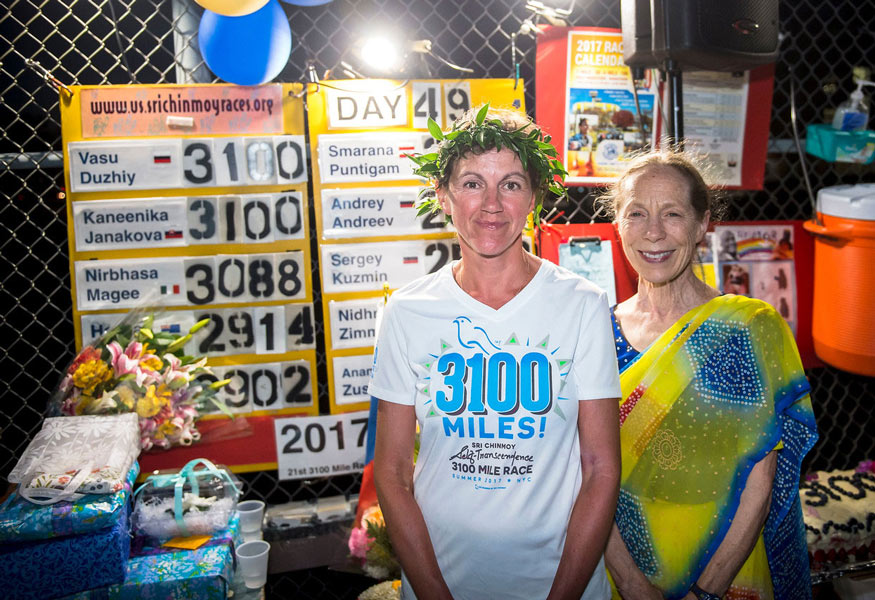
48 days and 14 hours after starting the Sri Chinmoy Self-Transcendence 3100 Mile Race, Kaneenika Janakova,47, of Bratislava, Slovakia set a new women’s world record for the distance. Her final time was 48 days+14:24:10, averaging over 63 miles for nearly two months of daily racing.
Kaneenika broke the previous women’s record set by Surasa Mairer by over 17 hours. Her performance was also sufficient to finish 2nd overall.
After a difficult opening few days, Kaneenika was a model of consistency averaging well over the required minimum daily distance of 60 miles. She remarked how over the course of the race she felt stronger - despite the accumulation of miles and physical fatigue.
“At the beginning of the race I actually didn’t feel so strong, the first week and maybe even 10 days. But then all of a sudden it felt as though I was gaining the strength. It just all started happening. It was all coming from inside.” - Kaneenika
Vasu Duzihy overall winner
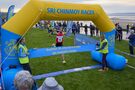
The overall winner of the race was Vasu Duzhiy 51, of St Petersburg, Russia, who won the 21st Annual Sri Chinmoy Self-Transcendence 3100 Mile Race for the second time in 46 days+17:38:22. It was Vasu’s sixth consecutive finish and his second consecutive first place. His performance was all the more remarkable for a serious back accident eight months ago, which left him unable to train and barely able to stand. Speaking after the race, Vasu expressed his joy of competing in the contest.
“I love this race. I don’t know why I love it. I just love it and do it. I am happy here and I am able to do self transcendence. I hope that I can inspire some people to be better citizens of the world. They inspire me and I inspire them.” - Vasu
Over 100 spectators came to see the finish of the runners who had braved extremes of temperature, sickness, and the unremitting nature of the concrete block which had been their home and sporting pilgrimage for the past several weeks.
3rd place for Nirbhasa Magee
On Saturday night, Nirbhasa Magee, a native of Dublin, Ireland finished second man, third overall in a personal best time of 48 days+16:47:01. It was Nirbhasa’s second attempt at the distance, managing to improve his finish time by two days plus 19 hours faster than his previous effort in 2015. For Magee, the spirit of self-transcendence is the essence of the race, remarking:
“It is nice to transcend yourself… I am not leaving anything on the table. It is not like I am taking it easy. What you see from me every day is my absolute best that I can put out." - Nirbhasa
The race continues for a few days with Harita Davies (NZ) and Yolanda Holder (US) within striking distance of finishing the race within the allotted time of 52 days.
Video: Race tips from 6-day record holder Dipali Cunningham
riguardo l'autore:
Nirbhasa is from Ireland. He is an enthusiastic multi-day runner, having completed four times the Sri Chinmoy Self-Transcendence 3100 Mile Race - the longest race in the world.
During this year's edition of the 3100 Mile Race, Dipali Cunningham has been coming out to the course every day to share her enthusiasm and expertise with all the runners. Dipali has broken the women's world road record for 6 days numerous times, the most recent being the still-standing record of 513 miles set in 2009, aged 53.
While at the course, she has made a series of videos titled 'Dipali's Race Tips', where she explains some of the things the runners are doing in order to complete the distance within the 52 day cutoff.
The importance of a good helper
In this video, Dipali explains that the runners just want to be free to run, and not have to deal with any of the logistics involved in keeping moving, and how a good helper allows them to do that.
Coping with the sun and heat
During the summer months in New York, temperatures frequently get into the high 80's and 90's Fahrenheit (over 30 degrees Celsius) and so a good strategy for dealing with the heat and the sun's rays is a must.
More of Dipali's videos can be found on the Sri Chinmoy Marathon Team Vimeo channel, as well as daily race updates from race director Rupantar LaRusso. The videos were shot and edited by Utpal Marshall; more of Utpal's videos can be found on perfectionjourney.org
A Guinness World Record - for most one-handed claps in a minute!
riguardo l'autore:
Nirbhasa is from Ireland. He is an enthusiastic multi-day runner, having completed four times the Sri Chinmoy Self-Transcendence 3100 Mile Race - the longest race in the world.
Abhinabha Tangerman from just recieved confirmation from Guinness World Records for the most one-handed claps in a minute - an astonishingly fast 427! Abhinabha, a member of the Sri Chinmoy Marathon Team from Holland, set the record at the Impossibility-Challenger record breaking festival in Germany.
Abhinabha is also a very fast marathon runner, with a current best of 2:27, and holds the current record for our 12 hour invitational walking race in April at 65 miles. The record has gotten quite a lot of attention recently, which Abhinabha admits to being a little surprised by. He was introduced to the world of record breaking by his friend Ashrita Furman, also a Sri Chinmoy Marathon team member, who currently holds more Guinness World Records than any other person.
The New York Times profiles 3100 Mile runner Yolanda Holder
riguardo l'autore:
Rupantar has been the race director of the Sri Chinmoy Marathon Team since 1985, having been asked by Sri Chinmoy to serve in that capacity. As well as working on the big races the US Marathon Team organise each year - the 3100 Mile Race and the Six and 10 Day Race - he also spends a considerable amount of time archiving the Marathon Team's 40 year history on this website.
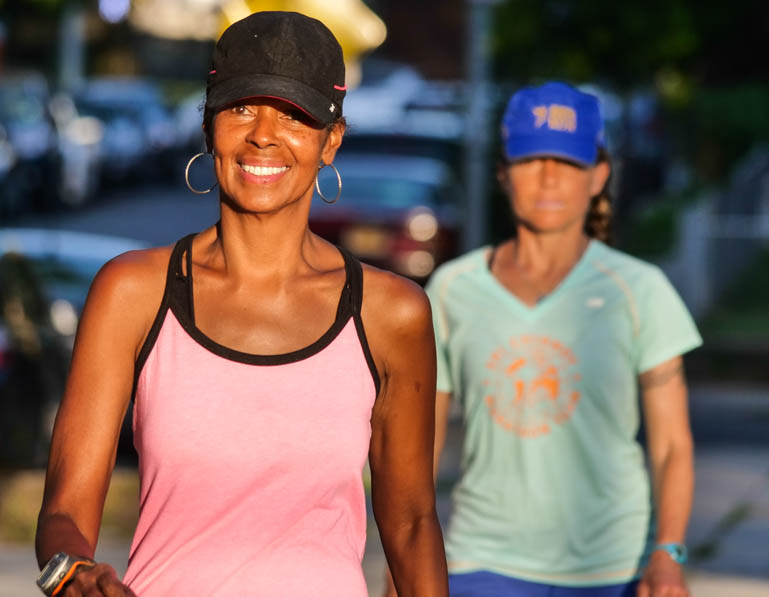
This year, Yolanda Holder aimed to be the first person to complete the 3100 Mile Race race by walking the entire distance. The New York Times' Corey Kilgannon came to visit the course and wrote a profile beginning as follows...
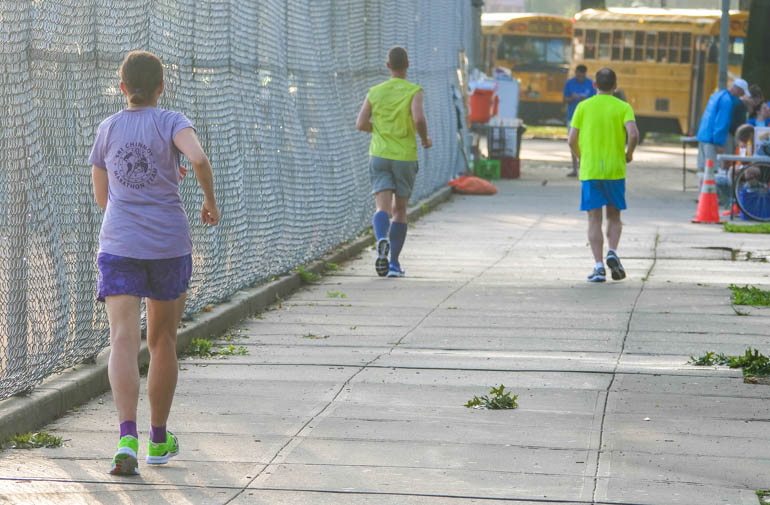
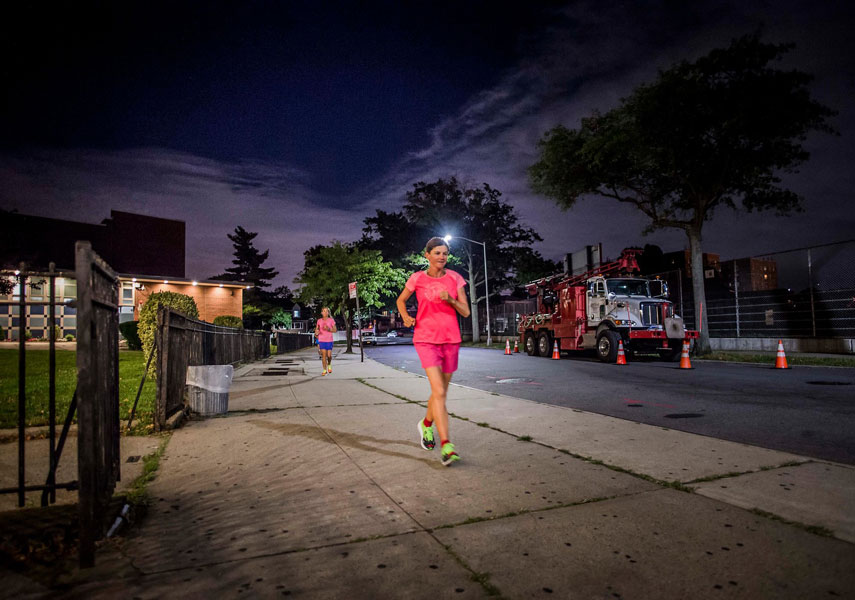
"On a recent weekday, a woman in hot pink exercise wear and a matching fedore strode briskly but effortlessly down a sidewalk alongside the Grand Central Parkway in Jamaica, Queens. The woman, Yolanda Holdler, 59, an endurance racewalker known as the Walking Diva for her fashionable race outfits, has drawn attention as a first-time entrant to an unusual race held every summer in which runners circle a single block for more than seven weeks straight, 18 hours a day, breaking only between midnight and 6 a.m. to sleep."
Video: How we became inspired to organise a triathlon
riguardo l'autore:
Nirbhasa is from Ireland. He is an enthusiastic multi-day runner, having completed four times the Sri Chinmoy Self-Transcendence 3100 Mile Race - the longest race in the world.
The Sri Chinmoy Marathon Team in Bristol, England has been holding triathlons since 2013, getting particular satisfaction out of encouraging people who have never done triathlons before to try one. In this vide, husband and wife Garga and Kokila Chamberlain, who are part of the organising team, explain how Sri Chinmoy gave them the initial inspiration for the triathlon, and what inspired them to aim their triathlons towards beginners.
As Garga says in the video: "We organise races for people because races bing out the best in everyone. You have to be so focused...being in a race, with that group energy, striving to give your best on the day; I think it brings out a really special part of each human being who takes part."
Tejvan organises short-distance running and cycling races for the Sri Chinmoy Marathon Team in his home city of Oxford. He is also a very good cyclist, having won the National hill climb championships in 2013 and finished 3rd in the National 100 Mile Time Trials in 2014.
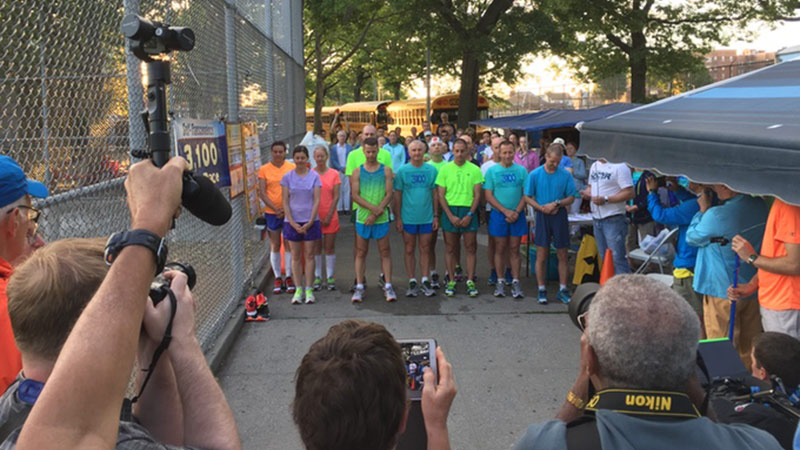
Group before the race
On the course
Smarana
Harita and Nidhruvi
Sahishnu one of the main organisers
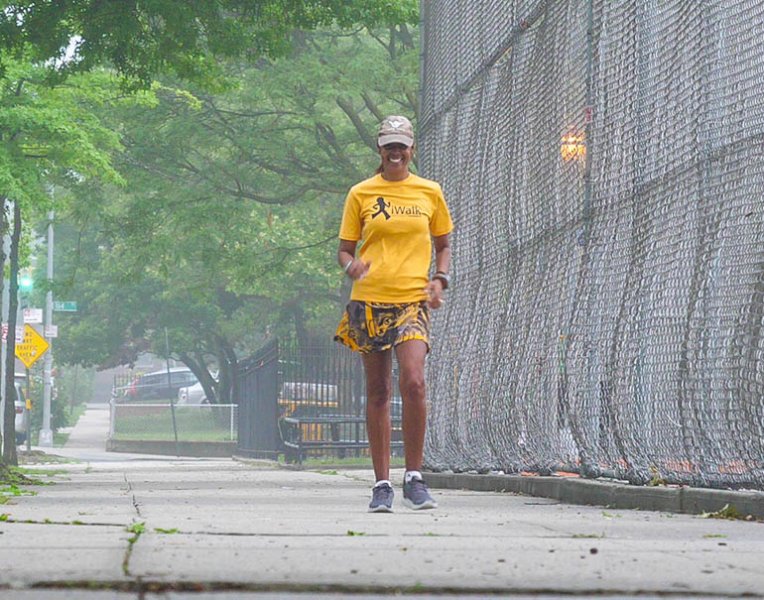
Yolander Holder
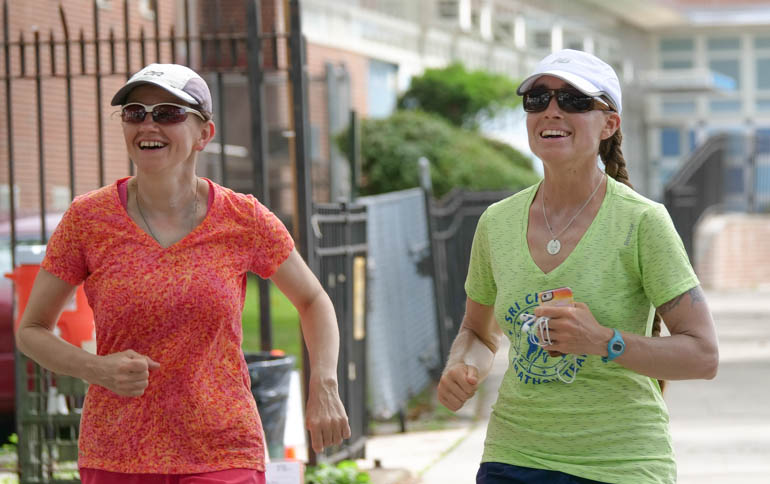
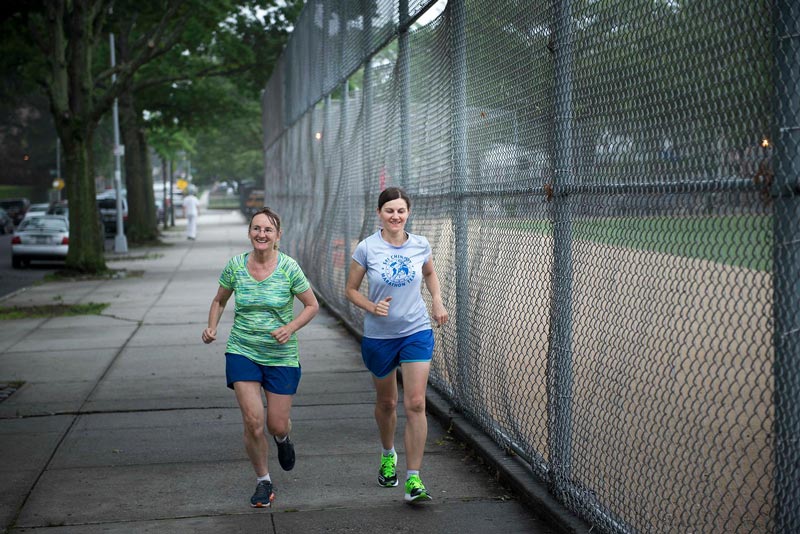
Two runners
The 3100 Mile Race
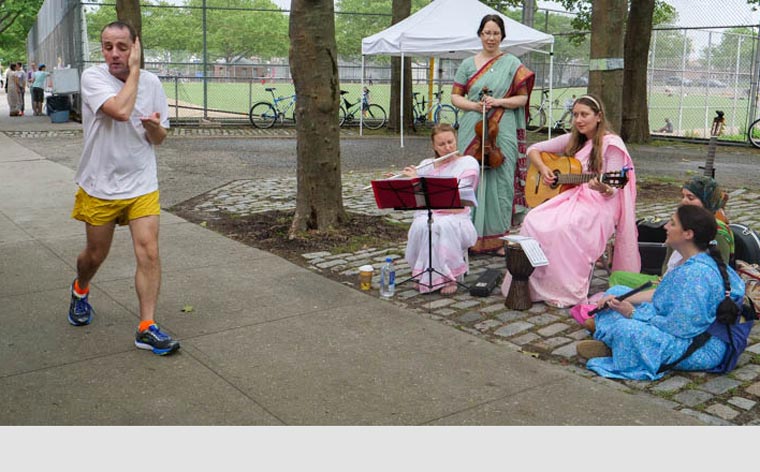
Singers on the course
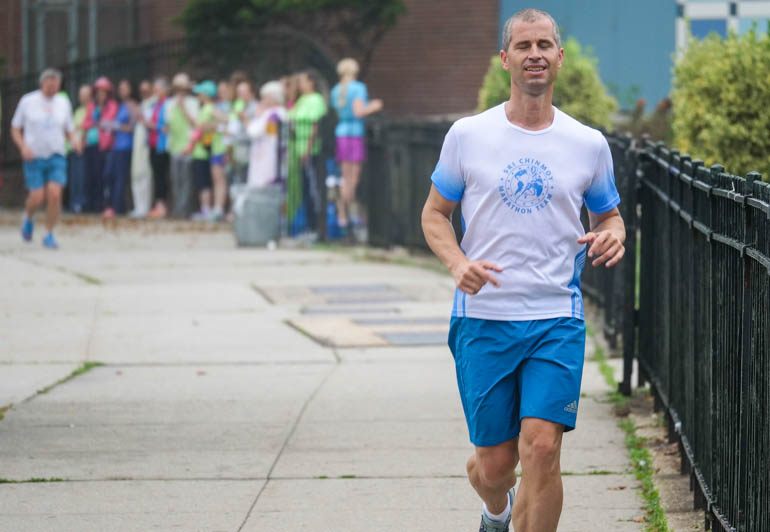
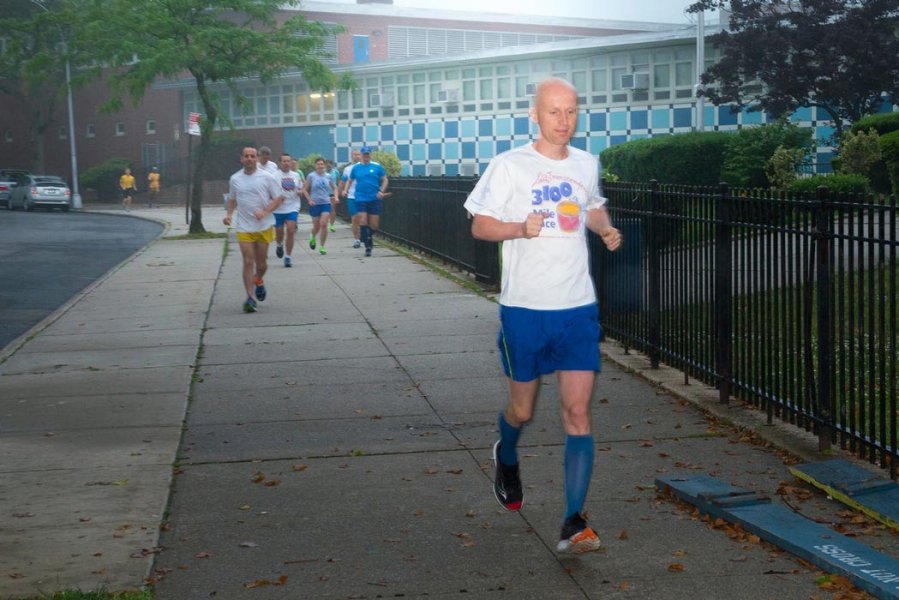
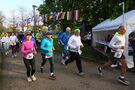
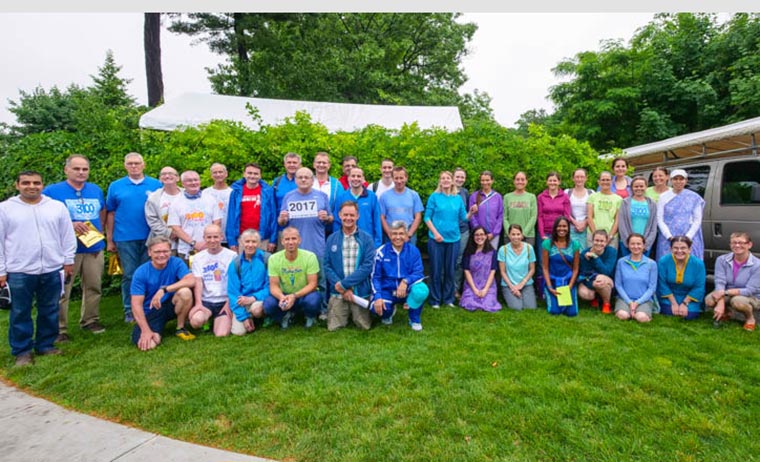
This year sees the 21st edition of the Self-Transcendence 3100 Mile Race. 10 runners took to the start line on June 18th to embark on the epic quest to complete 3,100 miles over the course of 52 days. Each runner will need to tap into deep reserves of - stamina, fitness, and inner strength - to meet the 60 mile a day average needed to complete the race. The race was founded by Sri Chinmoy, a spiritual teacher keen to promote physical self-transcendence as a way to the inner and outer enlightenment.
The race attracts international media attention for the unique personal challenge it presents. The race promoted by the Sri Chinmoy Marathon Team has an international flavour with runners drawn from Europe, US and New Zealand. In addition to the ten runners a team of volunteers look after the runners through cooking, medical team and lap counters.
“Go beyond, farther beyond!
Do not limit yourself
By comparing yourself with others
Or even with your own self.”
– Sri Chinmoy
Sri Chinmoy, Twenty-Seven Thousand Aspiration-Plants, Part 99, Agni Press, 1984
Vasu Duzhiy Age 51, St. Petersburg, Russia (5 finishes, 1 win)
Smarana Puntigam 46, Vienna Austria. Seven straight finishes.
Nidhruvi Zimmermann, 51, Vienna, Austria
Nirbhasa Magee, 37, Dublin Ireland
Andrey Andreev, 51, St Petersburg Russia
Sergey Kuzmin, 44, Nizhniy Novgorod Russia
Kaneenika Janakova, Age 47, Bratislava, Slovakia
Ananda-Lahari Zuskin, Age 42, Kosice, Slovakia
Yolanda Holder, 59, Corona,CA USA
Harita Davies, 42, Christchurch New Zealand
Update: 3100 Mile documentary clears its $75,000 Kickstarter goal
riguardo l'autore:
Nirbhasa is from Ireland. He is an enthusiastic multi-day runner, having completed four times the Sri Chinmoy Self-Transcendence 3100 Mile Race - the longest race in the world.
The start of the 2016 3100 Mile Race
The film tracks a Navajo runner on a 100-mile running quest...
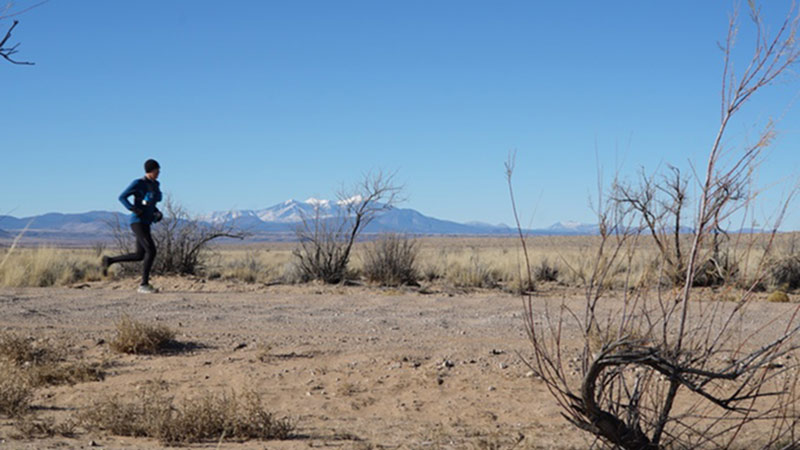
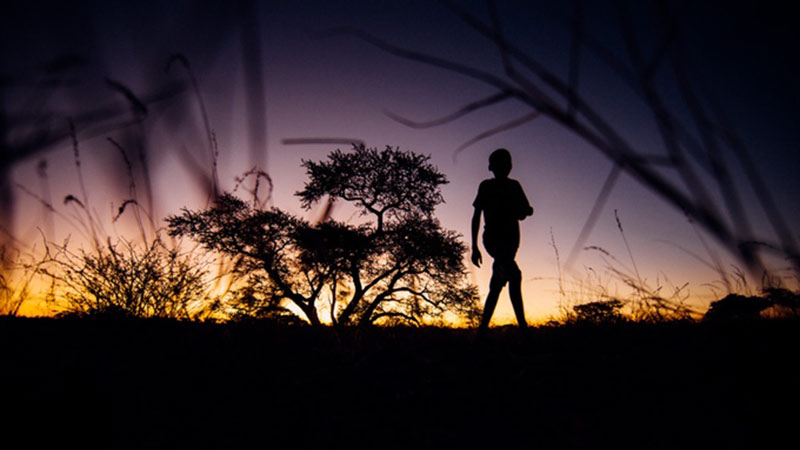
...and the running way of life of the Bushmen in the Kalahari
Update: As of last weekend, the goal has been reached!!!
As well as the next edition of the 3100 Mile Race which starts on June 18, we are also eagerly looking forward to a new documentary - 3100: Run and Become - which promises to be the definitive exploration of why ultra-runners do what they do.
For thousands of years, cultures all over the world have used running as part of their cultural and spiritual expression. The documentary's director, Sanjay Rawal, and crew spent time with the Navajo Nation in Arizona, the famed running monks of Japan and the Kalahari Bushmen in Botswana, as well as spending many days filming at last year's 3100 Mile Race. Editing of the film has already started, and a Kickstarter project attracted a lot of enthusiasm, reaching its $75,000 goal to enable the filmakers to complete the film by late summer.
On the Kickstarter page, you can find a 3 minute preview of the film, as well as updates on how the funding has been going.
6 and 10 Day Races 2017: the full report from Sahishnu
riguardo l'autore:
Rupantar has been the race director of the Sri Chinmoy Marathon Team since 1985, having been asked by Sri Chinmoy to serve in that capacity. As well as working on the big races the US Marathon Team organise each year - the 3100 Mile Race and the Six and 10 Day Race - he also spends a considerable amount of time archiving the Marathon Team's 40 year history on this website.
Now that the 2017 edition of this year's race is finished, race director Sahishni Sczesiul takes some time to recap the highs and lows of this unique multiday race.
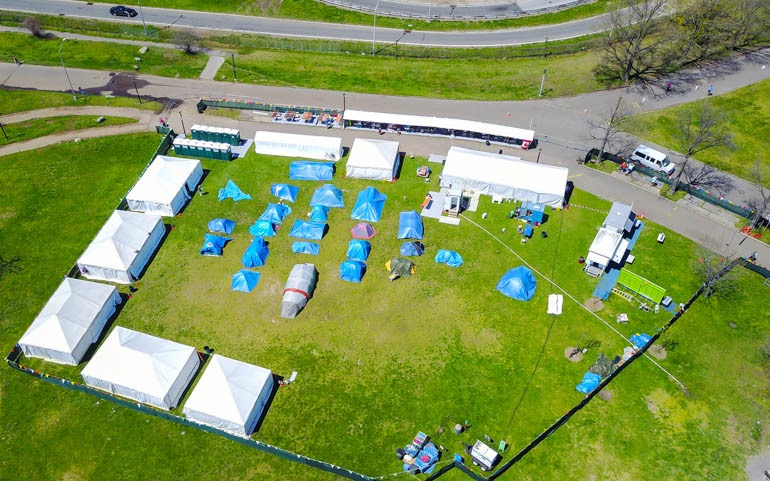
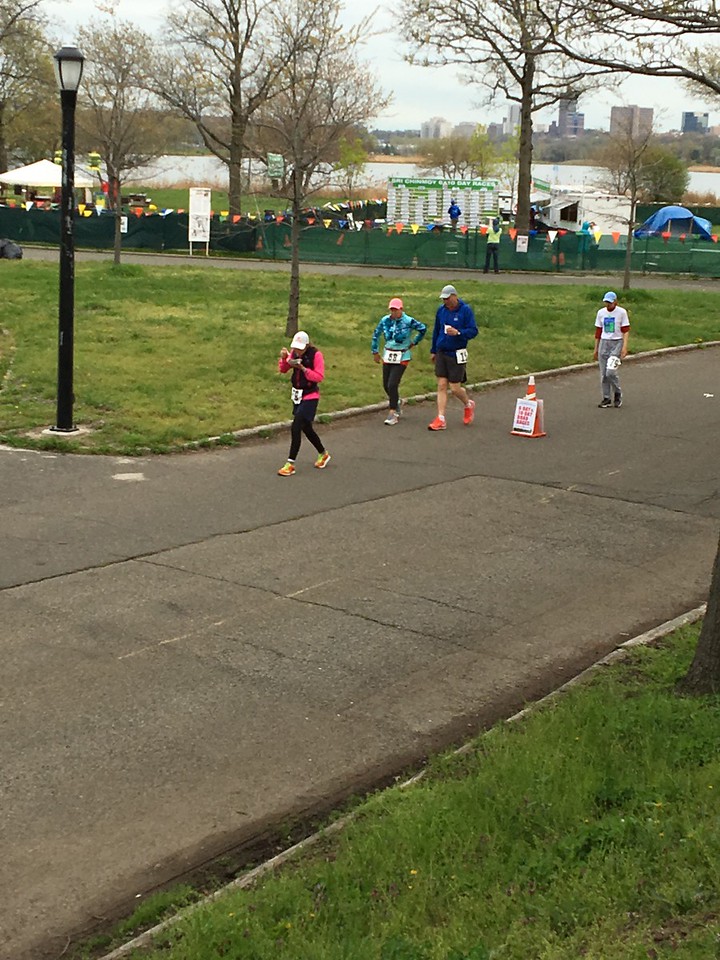
The 22nd Annual Sri Chinmoy Ten Day Race started on Monday, April 17 at noon, as 34 athletes left the cozy confines of their houses and apartments in various foreign countries (over 20) to do battle with 240 hours of running, nature’s elements and moving forward. The venue was the certified one-mile loop north of Meadow Lake in Flushing Meadows Corona Park.
Igor Mudryk from Vinnitsa, Ukraine was the highest ranked individual, with a few races over 700 miles for 10 days, as well as a fabulous finish of 3100 miles in 2011 (45+ days!!). Jesper Olsen from Denmark was one of the world’s most unique runners, having completed two attempts of running ‘around the world’, feats that have been documented and shared with other runners. He also had extensive multi-day races to his credit. Perhaps a new rising star of super-long distance was Mongolian Budjargal Byambaa who hinted at very good fitness and a desire to join the elite of long races. The ladies field featured several runners capable of close to 600 miles for 10 days, including Ukrainian Nataliya Hlushchuk, also from Vinnitsa Ukraine, and Slovakian Vinati Docziova from Kosice. Canadian Kimberley Van Delst was also considered a favorite due to her brisk running style from 2016 and improved training.
The men roared off the line with Budjargal Byambaa setting a quick pace. After a few laps, Igor Mudryck and Jesper Olsen bothered to chase the Mongolian as he cruised through the first 50km in a little over 5 hours. Igor was only 3 minutes behind Budjargal. By the time the 24-hour mark approached, Mr Byambaa had seized the lead and reached 108 miles, smoothly and efficiently. Igor Mudryk took a few breaks in the early hours but still reached 91 miles. Jesper was satisfied with 80 miles, and content to parse his energy. Kimberley Van Delst found her way to the front after a few hours, and was shrugging her shoulders when queried as to how well she was running. All smiles was her reply. By the end of the day, she had reached 80 miles, with Russian Elena Kareva (77 miles) and Nataliya Hlushchuk (75) staying close.
The very first 10 day Race in 1996 was won by Georgs Jermolajevs from Riga, Latvia, with a distance of 725 miles (1176.7 km). 21 years later, Georgs started this year again, at age 74. Australian legend Dipali Cunningham finished close to Georgs with 723 miles in that first contest - she would go on to win the Sri Chinmoy Six Day Race, (added in 1998) a record 18 straight times.
The 48-hour mark showed the trend of good runners rising to the top of the standings. Budjargal Byambaa was now in control of the race with 189 miles at the 2-day break. He was still running at 4.5 to five miles per hour, with little sign of fatigue. His lead had swelled to nearly 30 miles. By Day 3, Jesper Olsen had pulled even with Igor Mudryk with a 70-mile day, and had actually gained back over 10 miles to the lead of Mr. Byambaa. But Day 4 saw a resurgence for Budjargal, as he rattled off 73 miles and continued to run quickly and efficiently. Jesper could not sustain the speed that Budjargal possessed. Only Igor Mudryk could even consider keeping up with the Mongolian champion.
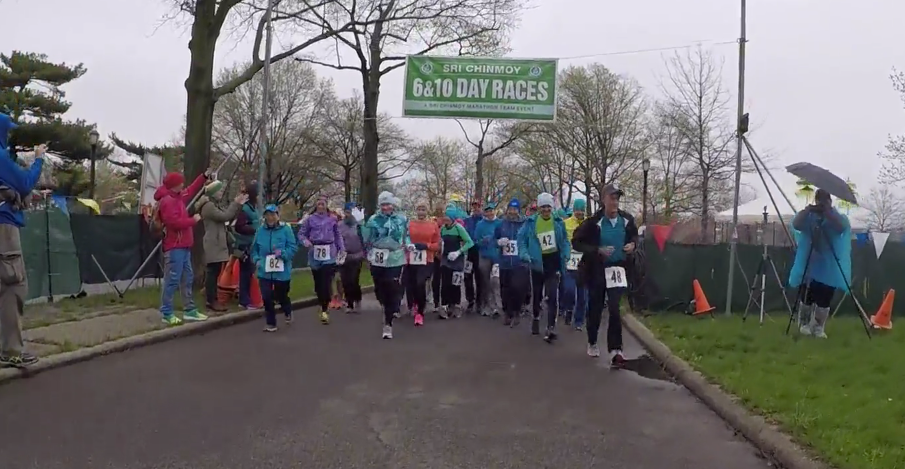
The end of the fourth day also signaled the beginning of the 20th Annual Sri Chinmoy Six Day Race. An equal number of runners - 34 - moved forward to join their fellow runners on the one-mile loop. Heavy favorite, and four-time winner of the Six Day race, Ashprihanal Aalto, was there, with American John Geesler and other North Americans, as well as several Eastern Europeans, some who were novices but ready to experience 144 hours of running and becoming. Vikena Yutz, the defending women’s champ was back, as well as New Zealander Kim Allan, a national class 24-hour runner. By the end of the first day for the Sixers, John Geesler had a slim 2-mile lead over Ashprihanal Aalto, and Kim Allan had an 18-mile separation over Vikena Yutz.
The start of the 6-day race
In the Ten Day race, the six day splits verified the race - Budjargal has reached 456 miles, his best total for that distance by over 100 miles. Igor equaled 425 miles. No other runners topped 400 miles. Nataliya Hlushchuk held a slim 2 mile lead over Kimberley Van Delst, 342 to 340 miles.
The 48-hour splits for the Six Day people showed Kim Allan still leading by almost 20 miles, but Kiwi Susan Marshall claiming third place and on the rise in effort. By the end of three days, Vikena had closed to within 16 miles of first, but leg and foot injuries were causing her much pain and anxiety. She tried to rest a lot on the evening of the fourth day, but dropped from the race when the pain was too much. On the other hand, Susan Marshall was running better, and had closed the gap to Kim Allan from 30 miles to 14. Ashprihanal Aalto had assumed the overall lead in the Six Day after 48 hours with 180 miles, which proved to be enough cushion for the race. He and John Geesler stayed well ahead of the rest of the field.
In the Ten Day, Budjargal Byambaa was emerging as a star runner. He eclipsed his personal best (601 miles) before the end of Day 8 with 605 miles, and fashioned an insurmountable lead over second place of 40 miles. To his credit, Igor Mudryk pulled back a few miles in the last two days, but Budjargal had become the star of the race, overcoming any obstacle, and still staying above 67 miles the last seven days of the event. Budjargal also announced his ascendency in world rankings, becoming the first Mongolian to pass 1000km (8:09:41:10); first Mongolian to 700 miles (9:07:45:18), and first Mongolian winner of the Sri Chinmoy Ten Day Race - 739 miles (1189.305 km). His 138-mile improvement for 10 days is highly noteworthy, and places him fifth-ranked for best totals in the Ten Day history. If pushed he could have easily done more. At 35 years of age, he has a lot of talent and heart to reveal. (Photo: Budjargal right)
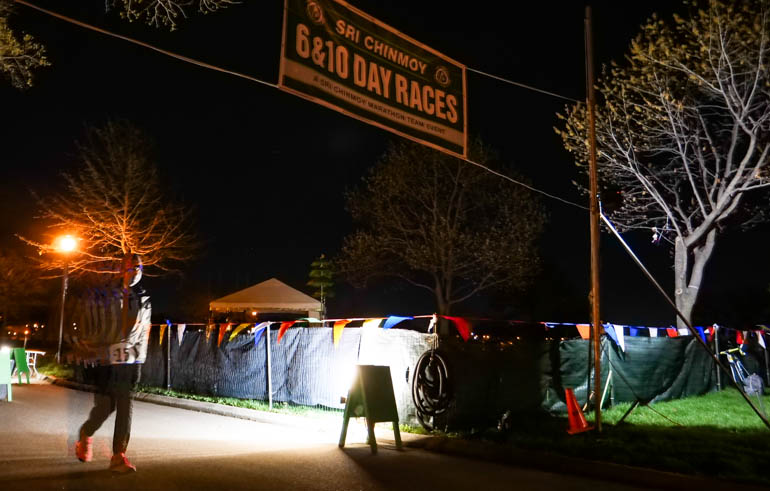
Igor Mudryk reached his personal best for 10 days with 713 miles, a couple better than his effort from 2009. Jesper Olsen held on to the last podium spot with 627 miles. There were several other personal bests in the men’s group, most notably Ales Pliva of the Czech Republic topping 600 miles for the first time (609), up from 534 miles, and 10-time Ten Day finisher Michel Gouin of Drummondville, Quebec, Canada making it 11 straight finishes – all eleven have been over 500 miles!
On the ladies side, Nataliya Hlushchuk won for the second time with 578 miles, a solid effort throughout, and as consistent as ever. Vinati Docziova ran 74 miles on the last day to lead all the ladies to the finish line as she finished second. Kimberley Van Delst held on for third with age-group Canadian records for six days, seven days and 10 days.
In the Six Day, Ashprihanal Aalto won the race for the fifth time. He totaled 441 miles on a gimpy knee and not a lot of training. True it was far short of his best 6-day of 505 miles, but he was still happy to share the park roads of Flushing Meadows with so many runners, going day and night to chase their dreams. John Geesler again finished second with 425 miles, and didn’t seem worse for wear after the race. He slept in his truck to avoid the rains that fell for a few of his days on the course. Aleksei Riabikov from Russia made the men’s podium with a fine first-time six-day effort of 377 miles. Through an interpreter he said the race gave him much satisfaction.
The women’s final results were a big surprise as Susan Marshall averaged 71 miles for each of the last three days to garner the victory with 408 miles, her first win. Her mileage was third best overall in the Six Day. Kim Allan held on to second place among the women with 364 miles, and Russian treasure Vera Kalishmanova, 61, from Volgograd, reached 332 miles and her second podium finish in three tries.
As the dust settles and the injuries heal, the runners have returned to their countries to bask in the glory or cope with the pain of recovery from injury. Yet, the undeniable feeling that we here in New York have after these two events have ended is one of gratitude for all the experiences - good or bad - that have been shared by runners and helpers alike. The sport of mult-day racing continues around the world. The many volunteers, helpers, professionals and organizers all agree- these races founded and nurtured by Sri Chinmoy over the decades give us hope and a glimpse of human potential. The energy at Sri Chinmoy Races is special. The runners’ ability to deal with everything over a period of 10 or 6 days and to reap satisfaction of any kind is a cause for celebration, and a small iota of perfection.
News from Hawaii: Abhejali swims the 26-mile Ka'iwi Channel
Abhejali with helper Jayalata - happy and exhausted after 21 hours and 52 minutes in the Ka'iwi or Molokai Channel
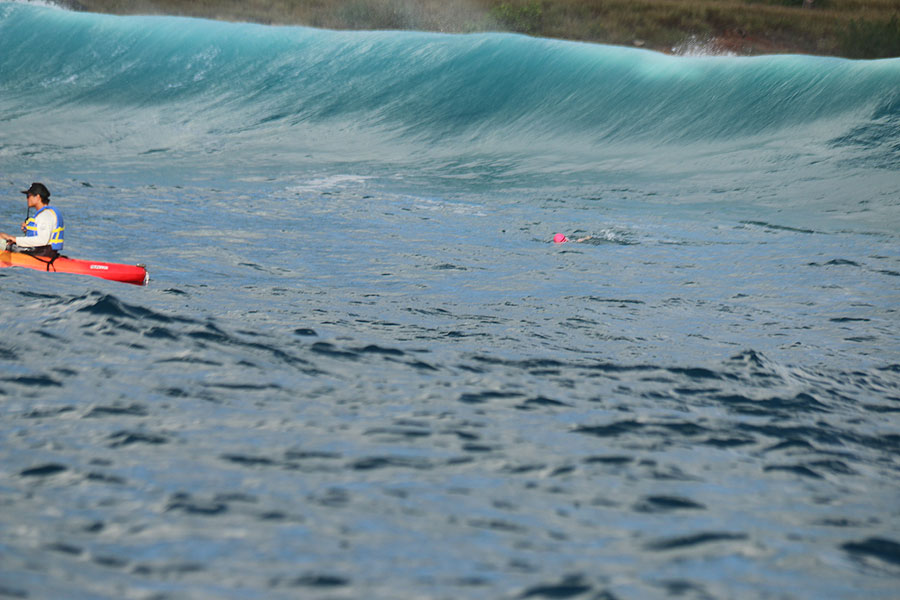
A challenging start through the surf on Molokai
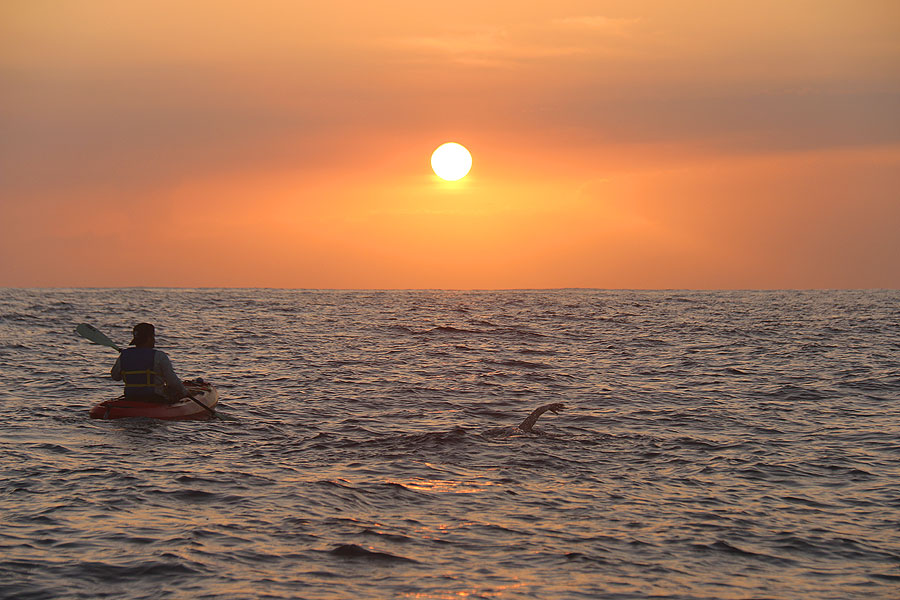
Swimming into a long night
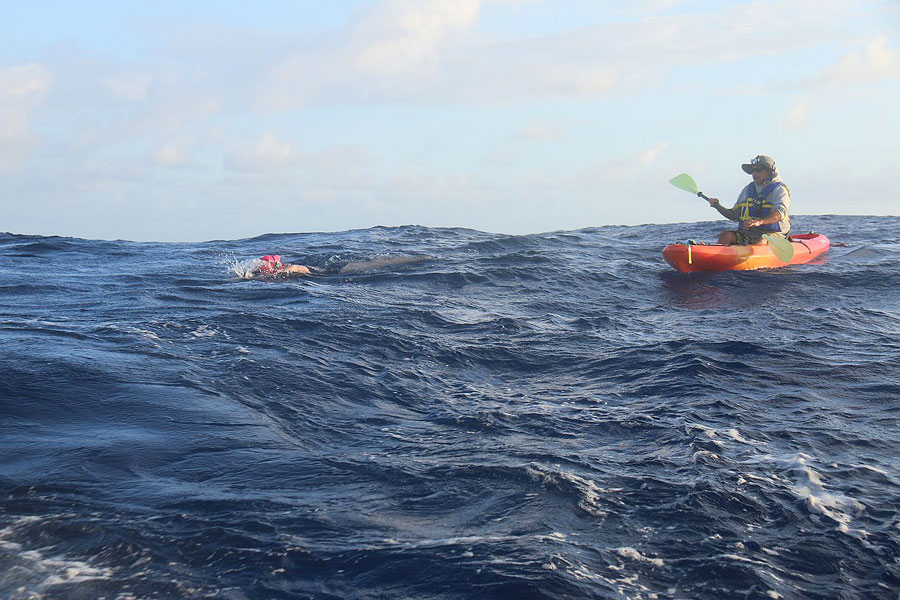
After a difficult night
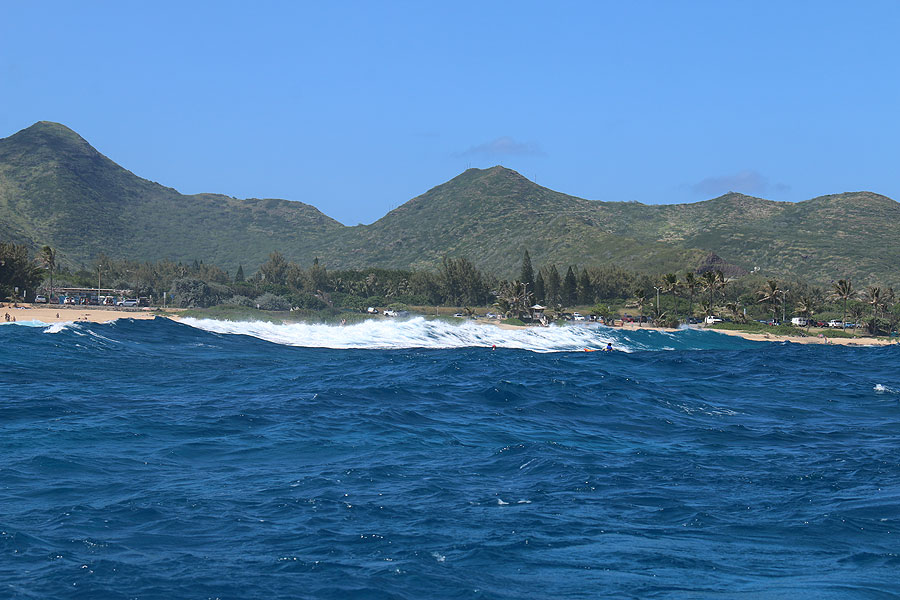
Sandy Beach, Ohau - the finish, again with a challenging surf
A great team!
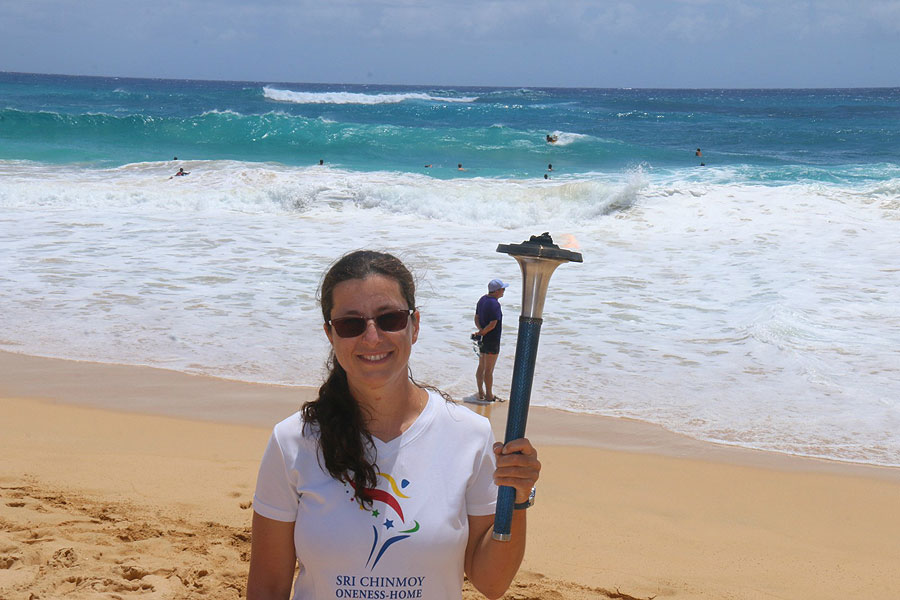
Revisiting the finish line with the Peace Torch
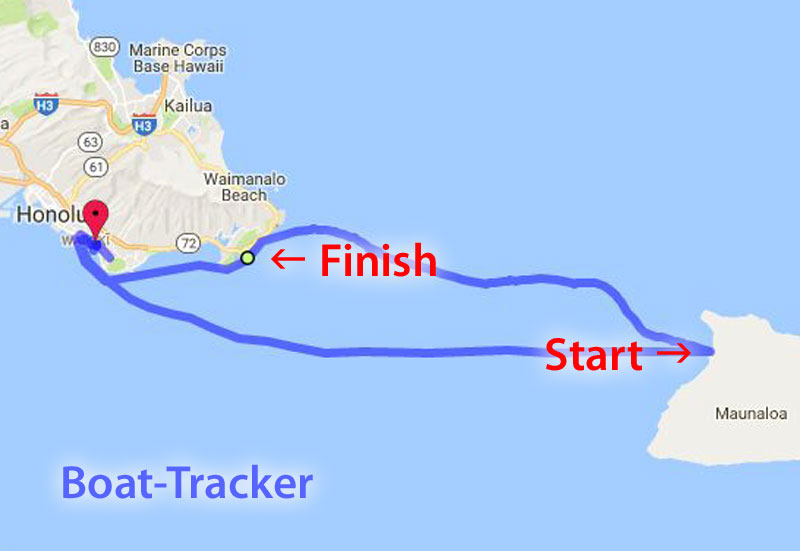
The boat and swim tracker (the boat came from Honolulu)
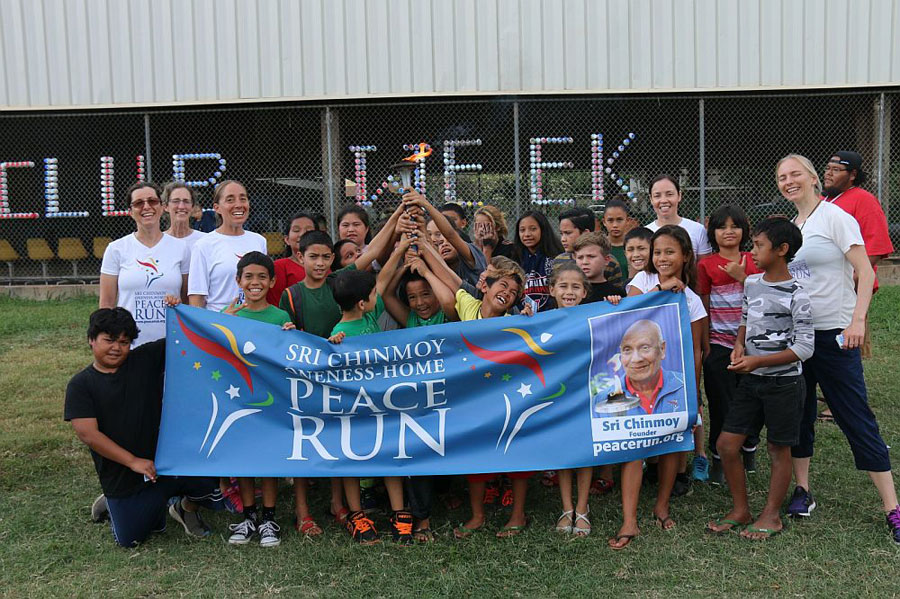
Visiting schools with the Peace Torch after the swim
Sri Chinmoy Marathon Team member Abhejali Bernardová completed her 5th 'Oceans Seven' swim on March 28, 2017 – the 42 km (26 mile) wide Ka'iwi Channel between the two Hawaiian islands of Molokai and Oahu.
Abhejali celebrated her 40th birthday with a rather atypical Hawaiian holiday - swimming the Ka'iwi Channel (also called the Molokai channel) protected by nothing more than a swimsuit, goggles, cap, sunscreen and a light stick at night, supported by her crew of helpers and hundreds of wellwishers from around the world.
Abhejali is the first Czech person to complete this noted swim without a wetsuit and unassisted, following English Channel rules. Only 46 swimmers in the world (with 50 swims), 19 of them women, had ever succeeded before (see list). Many swimmers’ attempts over the years had to be aborted, sometimes only after one or a few hours of swimming, due to life-threatening jellyfish stings, sharks, currents and numerous other factors. But Abhejali was very lucky, in spite of at times very difficult conditions.
The beeline route between the Pacific islands of Molokai and O'ahu is exactly marathon distance - 42 kilometers or 26 miles. Abhejali did not have an easy time during her 21 hours and 52 minute challenge, and was pushed quite a bit off the straight line between the two islands. Her first challenge was to swim to the beach for an official start at 5:21 p.m. through a huge surf. She was then pushed to the north for a few hours, with the currents changing just in time to allow her westward journey (It seems our prayers worked in this regard – the pilot told her helpers to ask for higher support, and then the currents started to change!) Swimming through the pitch black new-moon night for 12 hours, with nothing to see apart from the lightsticks bobbing up and down on the kayak, made her seasick until the morning dawn. (The start was timed so as to allow her predicted landing to coincide with the slack or rising flood tide on Oahu.) Then for the last 9 hours, her progress was slowed down to 1 mile per hour by unfavourable currents again.
Her crossing of the Ka'iwi channel is Abhejali`s 5th successful Oceans Seven swim. The Oceans Seven challenge is the ocean equivalent to the Seven Summits (climbing the highest peaks on the seven continents) and involves conquering some of the toughest channels and straits around the world. With the English and Catalina Channel, the Straits of Gibraltar and Tsugaru in the bag, the next steps for Abhejali will be the North Channel between Ireland and Scotland in summer and the Cook Strait between the North and South islands of New Zealand at some later point. In addition, Abhejali is currently still the only Czech holder of the “Triple Crown” of open water swimming (English Channel, Catalina Channel and Manhattan island).
Abhejali, who works in a publishing company as a translator, has been a vegetarian for 20 years and practices meditation, which definitely helps her in preparing and enduring her athletic challenges. She is also a multiple Czech running champion over 100km and 24 hours and ran the 6-day race in New York, covering 616 km. Less than 3 weeks before her Molokai swim she organized the first Czech 6 hour indoor pool swim in her home town of Zlin, with over 100 solo and relay participants. She had this to say about her crossing: "You might say this is Hawaii - so what could be difficult? But believe me, it was definitely not about 'hanging loose'. Even swimming to the start, over enormous waves, was a challenge. Then came the current pushing us north after it got dark, plus I got really seasick during the whole 12 hours of the night, unable to take anything in and throwing up for a long time. Only after daybreak was I able to normally eat and drink and get some energy again. Then I swam into two box jellyfish. I knew this could happen and it would be painful and dangerous, but I had no idea it would hurt so much and for such a long time. For the last 9 miles (about 15km) the waves and currents were against us, so the last part took me nine hours instead of the usual four.
I was very grateful to have a shark shield attached to my helper kajak, supplied for free by e-sharkforce, a company based in Hawaii. Sharks were one of the great topics before my crossing, especially since they had appeared in recent swims, so I was grateful for the protection and peace of mind that it brought. Luckily we did not encounter any sharks, but we saw humpback whales and dolphins. Bottom line: it was a beautiful and unique experience, but I'm glad - at least for the moment - that it is over and I made it across. Swimming in the mighty Pacific Ocean with its enormous power and erratic currents, wind and waves, was definitely an unforgettable experience.”
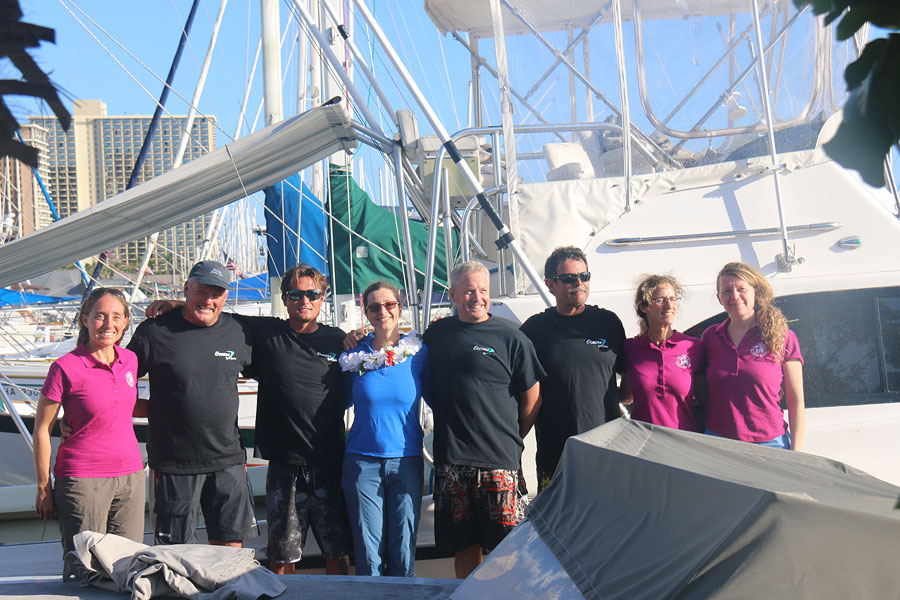
Abhejali with helpers Jayalata, Rupasi and Jayasalini, photo by Harita
Dedicated to Peace and Self-Transcendence
With her long distance swims Abhejali is trying to connect places and people, and to inspire others to transcend their own perceived limits and boundaries. In celebration of the 30th anniversary of the Sri Chinmoy Oneness-Home Peace Run this year, an global torch relay which Abhejali helps to organise in her spare time, she dedicated her Molokai Channel swim to peace, international friendship and world harmony. “You can say, every stroke in such a swim is a prayer - a prayer invoking and sending out positive energy, peace and harmony. Just as conquering an ocean takes an enormous amount of inspiration, dedication, determination, physical training, mind power as well as heart power, courage and persistence against all odds, plus the faith and conviction that something seemingly impossible can be made possible, so also peace-building is a slow process against many odds where every little effort counts and adds up, where the power of the heart is needed – by more and more people! And both are always team efforts!”
Speaking of team effort, she is extremely grateful to all her inner and outer supporters, including her helpers Harita (New Zealand), Rupasi (USA), Jayalata (Czech Republic) and Jayasalini (Russia), as well as the experienced boat captain Mike Twigg-Smith, co-Captain Mike Scott, kayakers Ecar Roush and Chris Harmes, and Jeff Kozlovic from the Ka'iwi Channel Association.
Looking back: 40 years of the Sri Chinmoy Marathon Team
riguardo l'autore:
Rupantar has been the race director of the Sri Chinmoy Marathon Team since 1985, having been asked by Sri Chinmoy to serve in that capacity. As well as working on the big races the US Marathon Team organise each year - the 3100 Mile Race and the Six and 10 Day Race - he also spends a considerable amount of time archiving the Marathon Team's 40 year history on this website.
The Sri Chinmoy Marathon Team celebrates its 40th birthday this year. Local Marathon Team director Sahishnu Sczcesiul writes about how the Marathon Team grew from Sri Chinmoy's philosophy of self-transcendence to the largest organiser of ultradistance and endurance events.
The Marathon Team is named after its founder and guiding light, spiritual Master Sri Chinmoy. The meditation leader had been a stellar athlete during his youth in his native India, excelling in sprinting, decathlon, soccer and volleyball in the spiritual community where he lived. Based in New York since 1964, he inspired his students to live a fulfilling life integrating the peace of meditation with the dynamism of action, particularly sport. The “self-transcendence” aspect of his philosophy was complemented by service to the world.
Sri Chinmoy resided in Jamaica, Queens, NY, in a quiet community, where he was joined by many of his followers. Like their teacher, they, too, were becoming runners, with his constant encouragement. Beginning in 1970, the Sri Chinmoy Centre Sports Day provided an annual opportunity for them to participate in track and field events. But long-distance running would become the hallmark of the Sri Chinmoy Marathon Team. In 1976, 33 students of the Master ran the non-stop Liberty Torch relay through the fifty states, carrying a flaming torch to honour America during the Bicentennial year. Long-distance running soon featured prominently in the spiritual life of Sri Chinmoy’s students—for itself, and for the symbolism of the endless journey to perfection.
Sri Chinmoy urged his students to offer running races to the public—for dynamism, energy and joy, as well as fitness and health. The first running event in the history of the Sri Chinmoy Marathon Team took place on October 2, 1977, in the hills and dales of Greenwich, Connecticut.
A 1979 half-marathon in Flushing Meadow park, with over 500 people
The sprinkling of running races on the SCMT calendar would eventually become a flood, as new events of varying distances emerged (2 miles, 10K, 10 miles). Sri Chinmoy himself ventured into long-distance running in 1978, completing his first marathon on March 3, 1979 in 4:31:34 and, just 22 days later, his fastest, in 3:55:07. Twenty more marathons and two 47-mile ultras followed. He was vividly demonstrating both his own pursuit of physical excellence and the power of his energizing message, even as he reached the age of 47 years and beyond. By 1980, the Marathon Team was sponsoring marathons, 13-mile races, five-mile races and even a 24-hour event. Triathlons joined the schedule, as well as 70-mile races and weekly two-milers.
Sri Chinmoy with his friend and ultra running legend Ted Corbitt at the first 24-hour race in 1980
But the biggest and best was yet to come.In 1985, Sri Chinmoy encouraged the Team to stage a 1,000-mile race, the first of its kind in the Western hemisphere. In 1987 he increased the distance to 1,300 miles. In 1996, “the longest race in the world” became 2,700 miles; the next year it jumped to 3,100 miles, and so it remains every year: still the longest certified footrace in the world, held on a one-mile urban loop.
The 3100 Mile race - now in its 21st year
Conservatively, it is estimated that the Team has hosted nearly 2,000 running events in New York since 1977—including 124 multi-day races since 1985.
The expansion of the Marathon Team reached worldwide, and many countries continue to schedule running events, long-distance swimming races, bicycle races, triathlons, marathons and ultras of various distances under the SCMT banner. Just like the New York races, all events strive to maintain the lofty standards of precision and personal service established by Sri Chinmoy himself, with proper runner splits and timing, multiple aid stations, enthusiastic support and—importantly!—great vegetarian food.
The Sri Chinmoy Marathon Team organises races in over 20 countries - including this one in Australia
The theme of the races offered by the Sri Chinmoy Marathon Team continues to be “self-transcendence”—going beyond one’s perceived limitations and finding new capacity, which ultimately leads to real satisfaction. May the Marathon Team always treasure the self-giving principle that Sri Chinmoy offered to the world: “Never give up, never give up. You can always do more, you can always love more, you can always offer more.”
On behalf of the Sri Chinmoy Marathon Team, we, the volunteer staff, offer gratitude to all the athletes of the last 40 years for running our races and giving us the joy of serving our fellow travelers on life’s great journey.
Video: 'Things that seem impossible actually can be very, very possible'
riguardo l'autore:
Nirbhasa is from Ireland. He is an enthusiastic multi-day runner, having completed four times the Sri Chinmoy Self-Transcendence 3100 Mile Race - the longest race in the world.
'This race is all about how things that seem impossible actually can be very possible...'. So begins our interview with Jayasalini Abramovskikh, who in 2014 became the first female Russian finisher of the 3100 Mile Race. She describes how she found the prospect of asking for two months off her job as an economist in Moscow to participate in the race quite daunting, but how if you are meant to do something then it will all work out.
She also talks a little bit about her goals after the race: "For me the answer is to have that deep inner connection with my soul, with my inner being, at every moment of my life, as strong I had during the race. There, the conditions are so extreme, that every momnt is a sincere prayer, evey moment is a sincere cry, and every moment I felt my soul expressing itself in through me. Now i feel the real objective, the real goal for me now is to to be able to feel this during any moment during the whole life."
3,100 Mile Race featured in the Guardian's 'Joy of Six'
riguardo l'autore:
Rupantar has been the race director of the Sri Chinmoy Marathon Team since 1985, having been asked by Sri Chinmoy to serve in that capacity. As well as working on the big races the US Marathon Team organise each year - the 3100 Mile Race and the Six and 10 Day Race - he also spends a considerable amount of time archiving the Marathon Team's 40 year history on this website.
Photo: Ashprihanal Aalto of Finland completes the 3,100-Mile race in 2015 in a record-breaking time of 40 days 9 hours 6 minutes and 21 seconds.
The Joy of Six is a regular series of articles from the Guardian which focus on unearthing sport's hidden treasures. This week, the focus was on the worlds most unusual and bizarre races, including the world's longest certified race organised by the Sri Chinmoy Marathon Team - the Sri Chinmoy Self-Transcendence 3,100-Mile Race.
The article notes: "The race was founded by noted spiritual leader Sri Chinmoy, who opened the first meditation center in Queens after moving to the US in 1964. Finishers needn’t complete the full 3,100 miles, but that’s hardly the point. The goal is right there in the name: self-transcendence, achieved by pushing yourself beyond your physical limits."
Other races mentioned included the Iron Man ice competition in Arizona, the Man v Horse marathon in Wales and The Big Five marathon in South Africa, where participants have to dodge the big five game animals: lion, elephant, leopard, buffalo and rhino.